
Reviewed · ST ANDREWS & FIFE DAY TRIPS
St Andrews: 90-Minute Historical Walking Tour
St Andrews has far more to tell than its famous golf story. On this 90-minute historical walk, local historian Richard Falconer takes you through university courtyards, medieval ruins, the harbour, and lesser-known corners tied to Scotland’s kings, queens, churchmen, and scholars. His research reaches back more than 2,000 years, including stories that have slipped out of the usual guidebooks.
I like two things right away. First, the tour goes beyond the standard Cathedral and Castle stop, with details about the St Andrews Meridian Line, a former Knights Templar site, and a forgotten university dwelling. Second, Richard’s research gives the walk a clear sense of purpose. The main consideration is that you need strong spoken English and a reasonably brisk walking pace, so this is not a good fit for visitors with mobility problems or limited English.
In This Review
- Key points to know before you book
- Why St Andrews rewards a history-first walk
- Starting at Church Square and St Mary’s College
- Medieval history at the School of History
- St Leonards School and The Pends
- St Andrews Harbour and the town by the water
- The Cathedral, lost treasure, and the fall of a great centre
- St Andrews Castle and the stories around it
- St Salvator’s College and the final walk to Central Bar
- What makes Richard Falconer’s approach different
- Audio, pace, language, and group comfort
- Is $20 a fair price for 90 minutes?
- Who should book this St Andrews walk?
- Final verdict: book for history, not golf
- FAQ
- How long does the St Andrews historical walking tour last?
- Where does the tour start?
- Where does the tour finish?
- Who leads the walking tour?
- What language is the tour conducted in?
- Does the tour include golf history?
- Is the tour suitable for people with mobility impairments?
- What should I bring?
- Can children join the tour?
- Can I cancel the booking?
Key points to know before you book
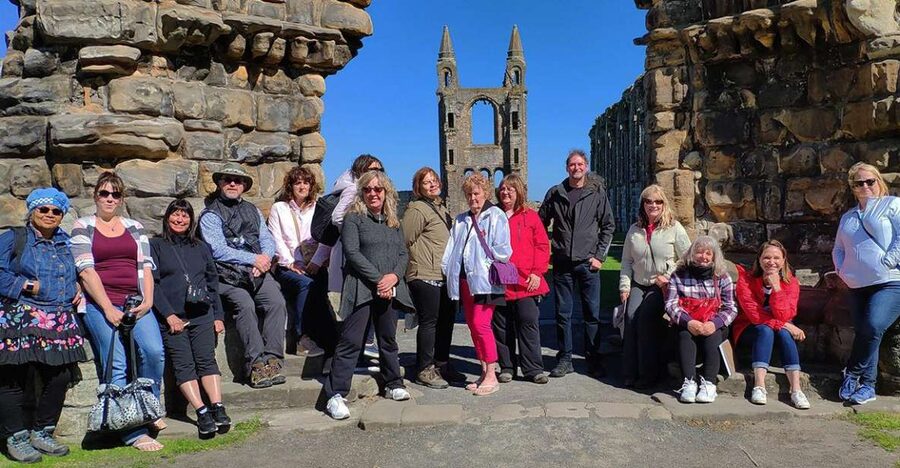
- Local research, not just famous sights: Richard Falconer has spent more than 40 years studying St Andrews and focuses on its lost and forgotten past.
- A compact route through major landmarks: You see St Mary’s College, The Pends, the harbour, Cathedral, Castle, and St Salvator’s College within 90 minutes.
- The university is central to the story: You’ll learn about the colleges of Scotland’s oldest university and a nearly forgotten 16th-century university home.
- The tour is not about golf: The route concentrates on religious, royal, academic, and civic history.
- Helpful audio equipment for larger groups: A personal wireless receiver and whisper earphone help you hear the guide.
- Good value at $20: For a short introduction led by a professional historian, the price is fair, especially if you want context before exploring on your own.
Why St Andrews rewards a history-first walk
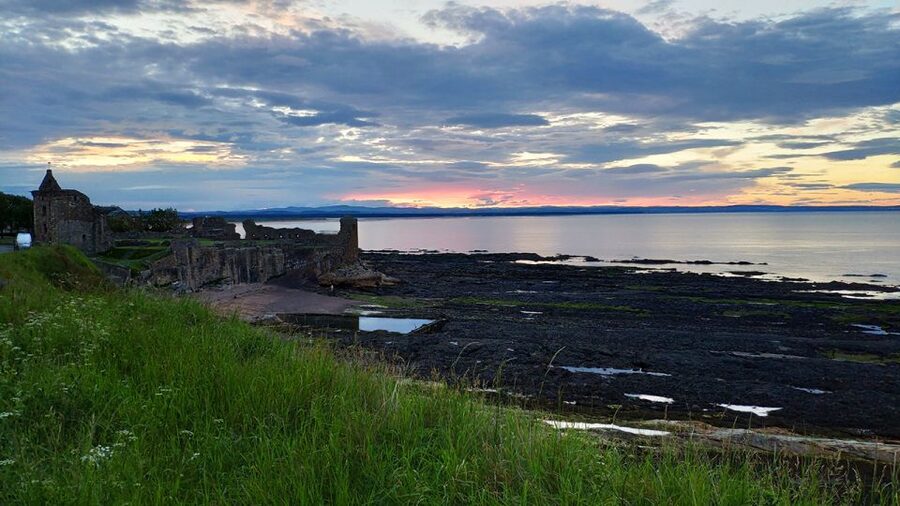
St Andrews is easy to underestimate. Many visitors arrive for golf, photograph the Cathedral ruins, glance at the Castle, and move on. This walk gives you a different way into the town. It treats St Andrews as a spiritual centre, a royal setting, a university town, and a place where layers of history have been lost, altered, or forgotten.
Richard’s work reaches back to around 500 BC and follows the town through the Pictish kings, medieval church power, the Scottish monarchy, and the university’s long academic life. Stories connected with Robert the Bruce, Mary of Guise, James V, Mary Queen of Scots, and Prince William place local streets in a wider Scottish story.
I particularly like the emphasis on evidence and research. This is not presented as a simple myths-and-legends stroll. You hear about Richard’s own investigations, including his work on the lost treasure of St Andrews Cathedral and its possible whereabouts. That gives the tour a more investigative feel than a standard sightseeing circuit.
The format also helps. Ninety minutes is long enough to build a picture of the town but short enough to fit around a visit to the Cathedral, Castle, university buildings, or a meal. You are not spending half a day on a walking tour when you may want time to explore the ruins at your own pace.
More St Andrews and Fife day trips:
- St Andrews Must-Sees Daily Walking Tour (11am & 2pm)
★ 5.0 · 478 reviews - St Andrews: Golf Origins and Old Course History Tour
★ 4.7 · 322 reviews - St Andrews: Top Sights Guided Walking Tour
★ 4.7 · 223 reviews
Starting at Church Square and St Mary’s College
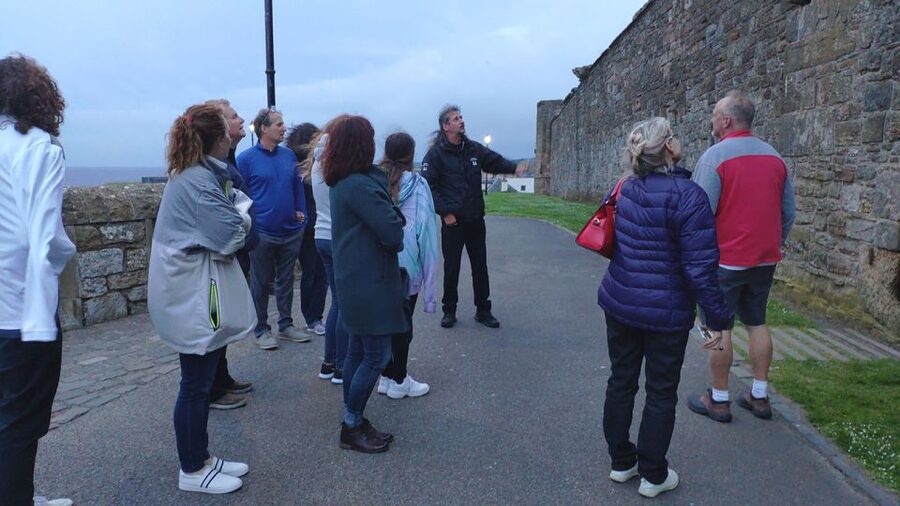
Meet outside The Bothy restaurant in Church Square, behind Holy Trinity Church. The restaurant was formerly called the Dolls House Restaurant, so check the current name when you arrive. Look for the local operator’s name board in front of the restaurant.
This is one place where I would allow extra time. The meeting sign can be easy to miss, and the tour leaves promptly. Arrive before the scheduled start rather than trying to find the group at the last moment.
The walk begins with St Mary’s College, one of the university buildings that helps explain why St Andrews still feels like an academic town rather than only a historic monument. The University of St Andrews is the oldest university in Scotland, and the college buildings provide a useful starting point for its long story.
Expect a photo stop and sightseeing here, with Richard explaining the college’s place in the town. This part should appeal to you if you enjoy seeing how a working university occupies old buildings and historic spaces. The tour is not only about stones and dates. It connects the buildings with the people and institutions that shaped St Andrews.
Medieval history at the School of History
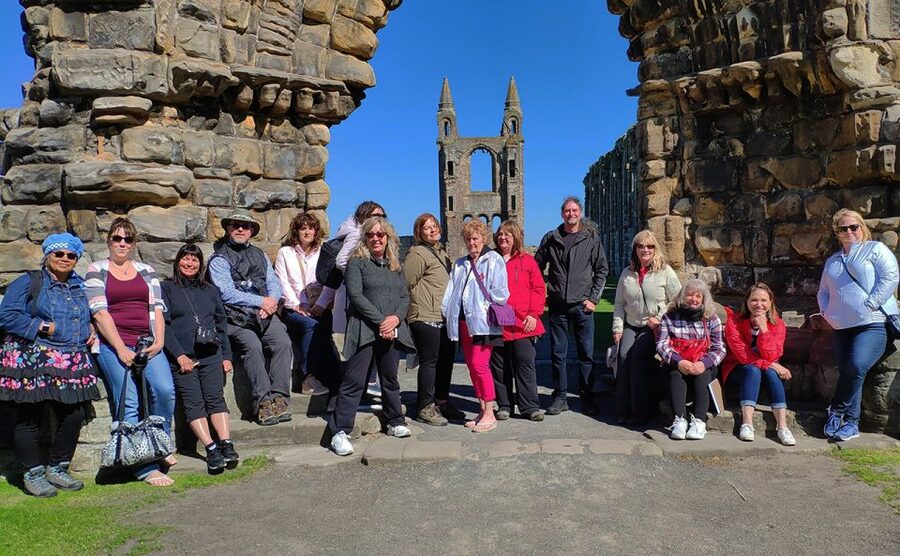
The next stop is the School of History, with a focus on medieval history. It is listed as a photo stop, so the visit is brief, but it reinforces the academic side of St Andrews.
This is a good example of how the route mixes visible landmarks with ideas. You are not simply moving from one old building to another. The walk asks you to consider how the town’s past has been studied, preserved, and sometimes overlooked.
If you want a long indoor visit to university rooms, this is not that sort of tour. The strength here is the guide’s explanation outside, with the surrounding buildings acting as the setting. Keep your expectations focused on commentary and orientation rather than extended admissions or interior tours.
St Leonards School and The Pends
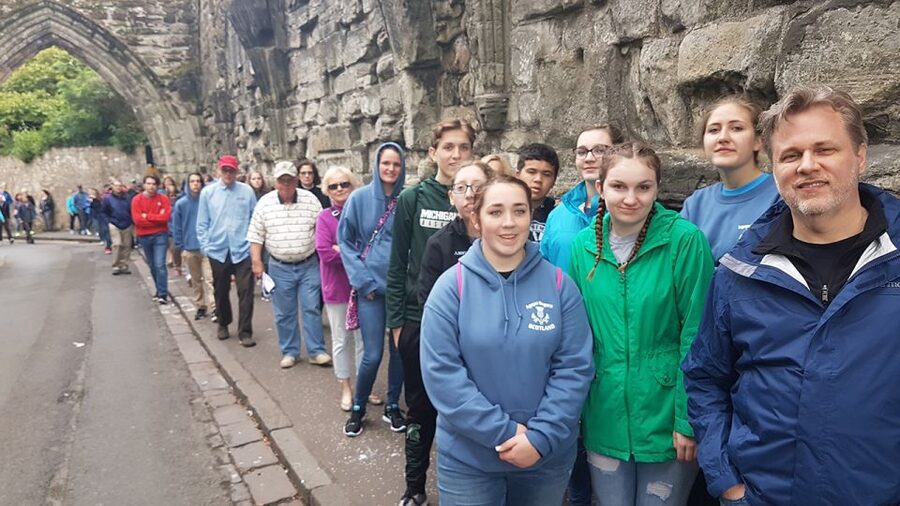
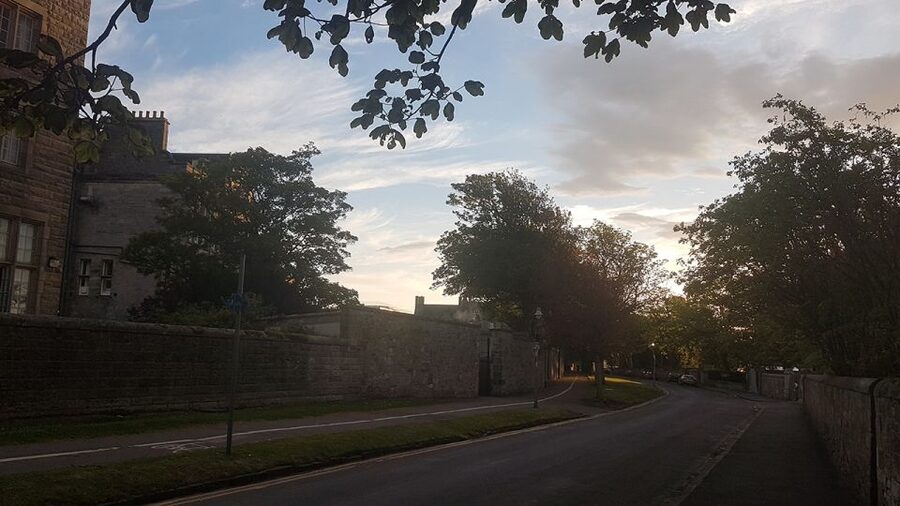
The route passes St Leonards School before reaching The Pends. St Leonards is a pass-by stop, so you will not spend much time there. Its role is part of the broader view of St Andrews as a town shaped by education over many centuries.
The Pends is more substantial. You can expect a photo stop, sightseeing, and a short walk through or around this historic passage. Its position helps connect the university area with the older religious centre of town.
I like this section because it gets you off the most obvious path. The Pends is not as instantly recognisable as the Cathedral ruins, but it gives the walk texture. You see how movement through St Andrews has long been shaped by walls, gateways, old buildings, and narrow routes.
The guide’s off-the-beaten-track approach matters here. A passing glance may leave you with a medieval-looking lane and little else. Richard’s interpretation is intended to explain what the place meant and how it fits into the town’s wider story.
More historic sites in St Andrews:
- St Andrews: Town, Golf, and Old Course History Tour
★ 4.7 · 162 reviews - St Andrews Old Course History Tour, for the Golfer
★ 4.5 · 150 reviews - St Andrews Tours: Town, Golf and Old Course History
★ 5.0 · 138 reviews - St Andrews History Tours
★ 5.0 · 41 reviews
St Andrews Harbour and the town by the water
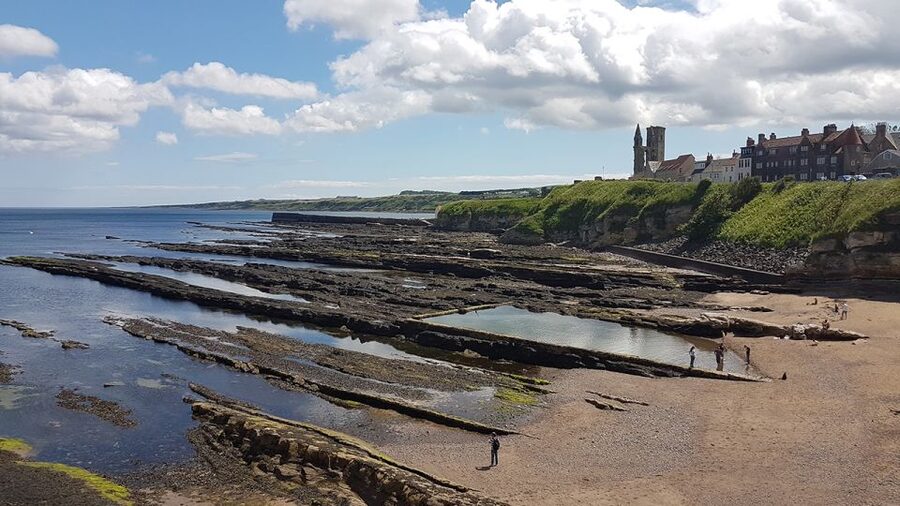
The walk continues to St Andrews Harbour for sightseeing and photographs. The harbour offers a change of setting after the university and medieval streets. It also gives you a chance to see the town in relation to the water rather than only as a collection of historic buildings.
This stop is useful for orientation. St Andrews was not only a religious and academic centre. Its location supported movement, trade, and connections beyond the town. The harbour helps broaden the picture before the route returns to the Cathedral and Castle area.
Because the entire walk lasts only 90 minutes, do not expect a long pause here. You will have time to look, listen, and take photographs, but the tour keeps moving. Wear comfortable shoes, and dress for the weather. The walk operates in rain unless conditions become too severe, so a waterproof jacket is a sensible choice.
The Cathedral, lost treasure, and the fall of a great centre
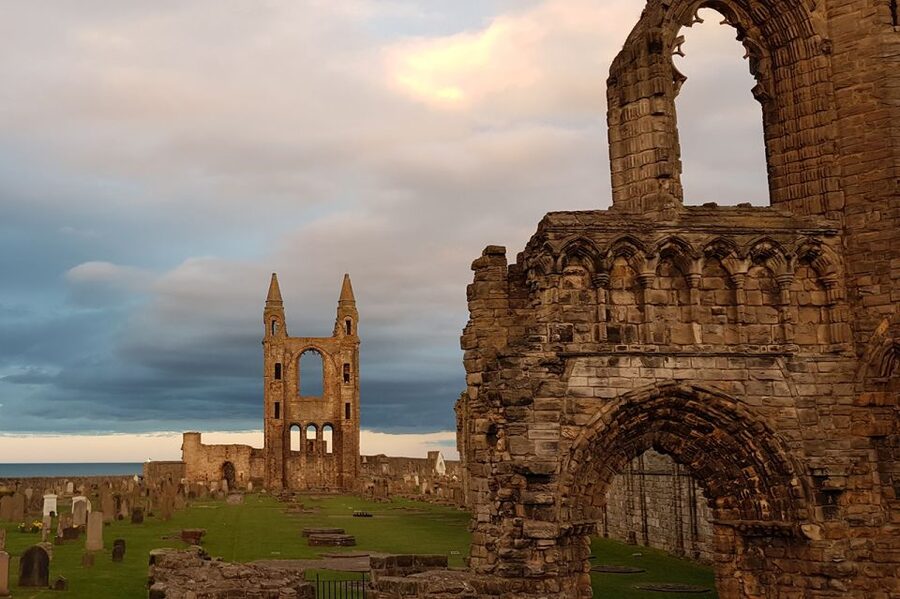
St Andrews Cathedral is the emotional centre of the route for many visitors. The ruins show the rise and fall of one of Scotland’s most important religious centres, and Richard uses the site to explain more than its architecture.
You hear about the Cathedral’s importance, its royal connections, and the lost treasure associated with it. Richard also shares the latest stage of his research into why that treasure may still be in the area. The wording matters here. The tour presents this as an area of research, not as a guaranteed treasure hunt.
The Cathedral stop includes a visit, sightseeing, and photographs. Still, this is not a dedicated archaeology tour or a full museum visit. The value comes from having the ruins interpreted in the context of St Andrews’ spiritual and political power.
I like that the story includes decline as well as glory. Historic sites can feel flat when every building is presented as a triumph. Here, the rise and fall of the Cathedral helps you understand how religious change and political shifts altered the town.
St Andrews Castle and the stories around it
The route then reaches St Andrews Castle. This is a sightseeing and pass-by stop, with photography rather than a long formal visit. You should plan a separate return if you want to explore the Castle in detail.
That limitation is worth noting when you compare this tour with an admission ticket or a longer guided visit. You see the Castle as part of the town’s connected story, but you are not promised an extended examination of its underground passages, defensive features, or interiors.
The short stop still has value. The Castle belongs to the same network of religious and royal power that shaped the Cathedral and the university. Richard’s wider discussion of Scottish rulers, including Mary of Guise, James V, and Mary Queen of Scots, helps place the ruins in the national story.
St Salvator’s College and the final walk to Central Bar
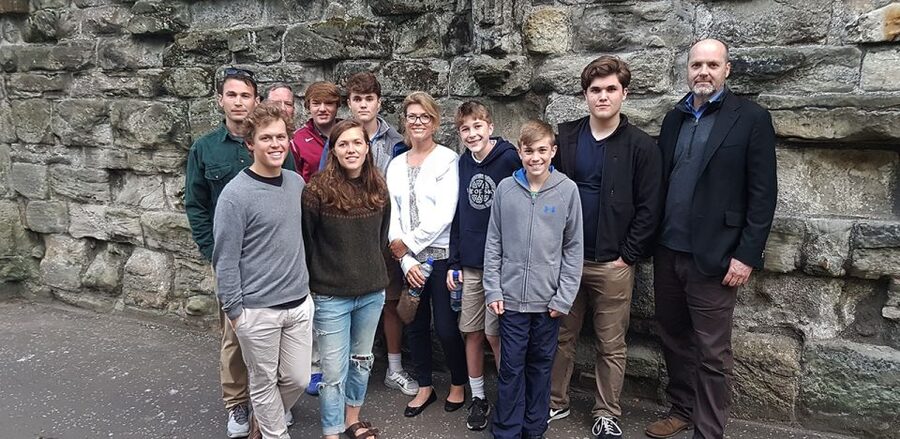
The final major stop is St Salvator’s College, with a visit, sightseeing, and photographs. Like St Mary’s College, it shows how the University of St Andrews remains woven into the historic centre.
By this point, the route has covered spiritual life, royal connections, academic buildings, the harbour, medieval passages, and the remains of major institutions. St Salvator’s makes a fitting final landmark because it brings the story back to the university and its continuing role in the town.
The activity finishes back at the meeting point, at Central Bar. That makes planning easy. You do not need to arrange transport back from a distant suburb or guess where the tour ends. You can continue with a meal, return to a site for a closer look, or use the remaining day for another St Andrews attraction.
What makes Richard Falconer’s approach different
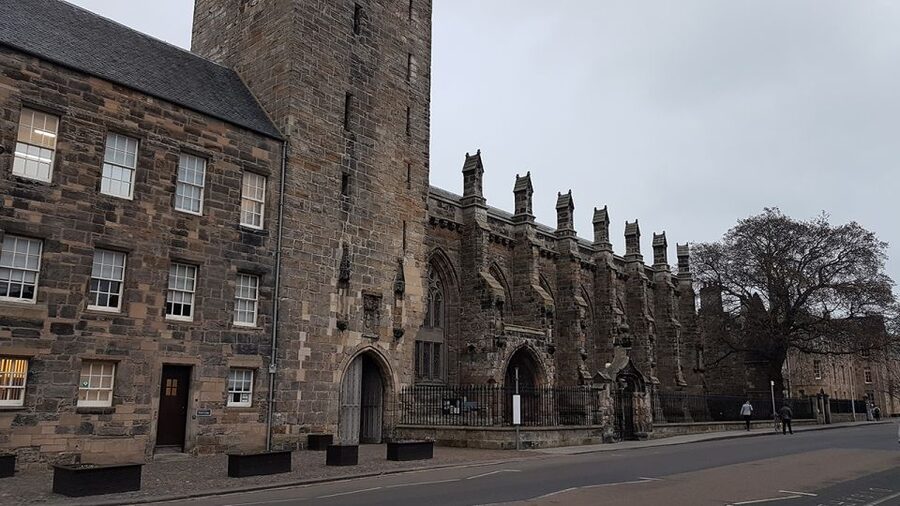
Richard is described as a professional author, historian, and guide who has researched St Andrews for over 40 years. That background shapes the tour’s focus. You are not signing up for a broad Scottish history lecture delivered anywhere in town. You are getting a local study of St Andrews, including places and stories that may not appear in a basic sightseeing route.
The most distinctive subjects include:
- St Andrews as a spiritual centre since about 500 BC
- Its links with Pictish kings and later Scottish royalty
- The former Scottish seat of the Knights Templar
- The St Andrews Meridian Line
- The demolition of the town’s first observatory
- A nearly forgotten 16th-century university dwelling
- The lost treasure of St Andrews Cathedral
Some of these topics will appeal strongly to history fans. Others may be too detailed if you only want a quick introduction to the town’s famous buildings. The tour’s best audience is someone who enjoys questions, old records, and unusual local details.
One practical note: a review of the experience refers to a guide named Tony, while the tour information identifies Richard Falconer as the guide and researcher. If having Richard specifically matters to you, confirm the guide when booking.
Audio, pace, language, and group comfort
Larger groups receive a personal wireless audio receiver and whisper earphone. This is a useful touch in a busy town, since you can listen without needing to crowd tightly around the guide. It also helps when street noise or wind makes normal conversation harder to follow.
The tour is conducted in English, and a fluent command of English is essential. Speaking slowly or translating during the walk will not make the tour workable for participants who cannot follow spoken English well. This is a history-heavy experience, so missing a few sentences could mean losing the point of an entire story.
The walking pace is another important filter. The activity is not suitable for people who walk slowly or have knee, hip, or ankle problems. It is also not suitable for wheelchair users or people with mobility impairments. Children under 16 need an adult, children under five can join free, and the tour is not suitable for children under two.
The group must remain sober and well behaved. Alcohol and drugs are not allowed, and anyone under the influence may be asked to leave without a refund. Assistance dogs are allowed, but other pets are not.
Is $20 a fair price for 90 minutes?
At $20 per person, this tour offers fair value if you want a guided introduction rather than a series of unconnected photographs. You are paying for a professional historian’s time, local research, and a route that covers several major parts of St Andrews without taking up your whole day.
The price is especially reasonable for a first visit. A good walking tour can help you decide which places deserve a longer return visit. You may finish wanting more time at the Cathedral or Castle, but you will understand why they matter and how they relate to the colleges and harbour.
The value is lower if you want golf history. This tour does not feature golf at all. For that subject, Richard offers separate tours covering the Old Course, golf, and town history, including one led from the perspective of an 80s professional caddie guide.
Free cancellation up to 24 hours before the start and reserve-now, pay-later booking make the $20 commitment easier to manage. The operator asks groups of more than 10 people to check availability directly.
Who should book this St Andrews walk?
I would choose this tour if you enjoy local history, old buildings, royal stories, and details that go beyond the usual highlights. It suits a first-time visitor who wants a quick framework for St Andrews, as well as a repeat visitor who has already seen the Cathedral and Castle but wants a different explanation of the town.
It is also a good fit for people who prefer a human guide to reading plaques. Richard’s research into lost sites and forgotten stories gives the walk a clear identity.
I would skip it if golf is your main reason for visiting, if you need wheelchair access, or if you cannot comfortably keep up with a brisk walking tour. Families with very young children should also think carefully. Children under five can join free, but the material and pace may suit older children and adults better.
Final verdict: book for history, not golf
Book this St Andrews historical walking tour if you want the town’s religious, royal, and academic past explained by a local researcher. The route covers a lot in 90 minutes, and the strongest feature is its attention to lost history, from the Knights Templar connection to the Cathedral’s missing treasure and the demolished observatory.
You should not book it expecting a full Cathedral or Castle visit, a relaxed pace, or any golf content. Arrive early at Church Square, wear sturdy shoes, bring weatherproof clothing, and make sure everyone in your group can follow fluent English.
For $20, it is a sensible way to get your bearings and learn why St Andrews is much more than a golf destination.
FAQ
How long does the St Andrews historical walking tour last?
The tour lasts 1.5 hours, or 90 minutes.
Where does the tour start?
Meet outside The Bothy restaurant in Church Square, St Andrews, KY16 9NN. The location was formerly called the Dolls House Restaurant, and the operator’s name board should be in front of the restaurant behind Holy Trinity Church.
Where does the tour finish?
The activity finishes back at the meeting point, at Central Bar.
Who leads the walking tour?
The tour is led by Richard Falconer, a professional author, historian, and guide who has researched St Andrews for more than 40 years.
What language is the tour conducted in?
The live tour is conducted in English. Participants need to understand spoken English well, since speaking slowly or translating is not considered workable for this tour.
Does the tour include golf history?
No. This walking tour does not feature golf. Separate tours cover the Old Course, golf, and town history.
Is the tour suitable for people with mobility impairments?
No. The tour is not suitable for wheelchair users or people with mobility impairments. It is also unsuitable for people who walk slowly or have knee, hip, or ankle problems.
What should I bring?
Bring comfortable shoes and clothing suitable for the weather. The tour runs in rain unless conditions become too extreme.
Can children join the tour?
Children under 16 must be accompanied by an adult. Children under five can participate free of charge, but the tour is not suitable for children under two.
Can I cancel the booking?
You can cancel up to 24 hours in advance for a full refund. Reserve-now, pay-later booking is also available.
More Walking Tours in St Andrews
- Private St. Andrews: Home of Golf Old Course Walking Tour
★ 5.0 · 69 reviews - St Andrews: Guided Walking Tour, 12pm, 2pm daily
★ 5.0 · 28 reviews - St Andrews: Town Highlights Private Guided Walking Tour
★ 4.9 · 25 reviews - Edinburgh: Harry Potter Magical Guided Walking Tour
★ 4.8 · 11,944 reviews
Just added around St Andrews
- Barrel-top whisky tasting in St Andrews★ 5.0 · 20 reviews
- St Andrews: Town Highlights Private Guided Walking Tour★ 4.9 · 25 reviews
- St Andrews: Guided Walking Tour, 12pm, 2pm daily★ 5.0 · 28 reviews
- Bespoke Private Tours of Scotland and the Borders★ 5.0 · 29 reviews
- Private St. Andrews Tour with Dedicated Local Guide★ 5.0 · 38 reviews
- Watch Building Experience – St Andrews★ 5.0 · 40 reviews
- St Andrews History Tours★ 5.0 · 41 reviews
- Private St. Andrews: Home of Golf Old Course Walking Tour★ 5.0 · 69 reviews
St Andrews & Fife Day Trips, compared.

St Andrews & the Fishing Villages of Fife Small-Group Day Tour from Edinburgh
Read our review →

Rosslyn Chapel, Dunfermline Abbey and Stirling Castle Day Tour
Read our review →
St Andrews Must-Sees Daily Walking Tour (11am & 2pm)
Read our review →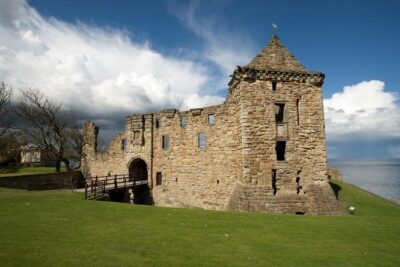
Rosslyn Chapel, Stirling Castle & Dunfermline Abbey Tour
Read our review →
Browse the lists this tour appears in