
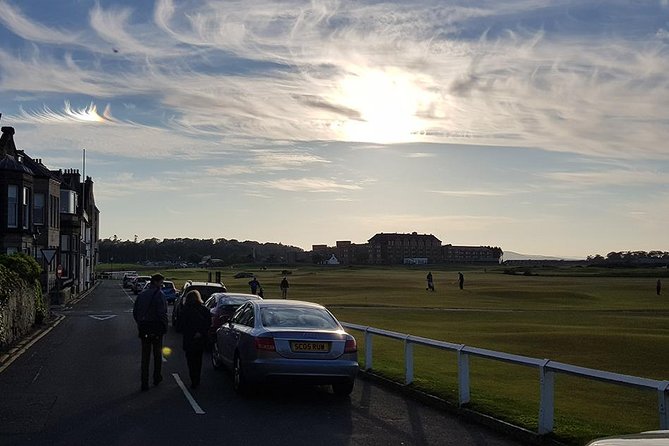
Reviewed · ST ANDREWS & FIFE DAY TRIPS
St Andrews Tours: Town, Golf and Old Course History
St Andrews is more than a famous golf course. This walking tour links the town’s university, cathedral ruins, castle, graveyard, and Old Course into one clear story, ending with a photo at Swilcan Bridge. Golf fans get the fairways and famous names, while non-golfers get a useful introduction to the town’s religious and academic past.
I like the guide-led storytelling, especially when Richard is leading. He has written several books about St Andrews and spent more than eight years as a caddie, so he can explain both the town’s past and the way the Old Course developed. I also like the efficient route, which gives you a good first look at St Andrews in less than two hours.
The main consideration is the pace and the walking. You need a fluent command of English, good mobility, and enough stamina for a fast-moving route. There is no place to leave strollers, walking aids, or golf clubs, and you cross part of the live course at your own risk.
In This Review
- Key points to know before you book
- Why this St Andrews walk works so well
- Starting at T-Squared Social on North Street
- The University of St Andrews and St Salvator’s College
- Cathedral ruins and the old golfing names
- St Andrews Castle and the road toward the Old Course
- Forty minutes beside the Old Course
- Finishing at Swilcan Bridge
- The guides and the quality of the storytelling
- Walking demands, language, and family suitability
- Who should book this St Andrews experience?
- Should you book the Town, Golf and Old Course History tour?
- FAQ
- How long does the St Andrews walking tour last?
- Where does the tour start and finish?
- Is the Old Course included?
- Is the tour suitable for people who do not play golf?
- Can children join the tour?
- What happens if bad weather cancels the tour?
Key points to know before you book
- Walk onto the Old Course: The tour includes the 1st and 18th fairways, subject to course activity and safety.
- Richard may be your guide: He is a local author, former caddie, and an especially strong source for golf and town history.
- More than a golf tour: The University of St Andrews, cathedral, castle, and ancient cemetery give the walk a broad historical focus.
- Finish at Swilcan Bridge: The famous bridge provides the tour’s best photo opportunity, except on tournament days.
- Plan for a brisk 1 hour 45 minutes: This is not a slow stroll, and the route is not suitable for mobility difficulties.
- Sunday can be a smart choice: No golf is played on the Old Course on Sunday, allowing you to walk farther across it after the tour if you wish.
Why this St Andrews walk works so well
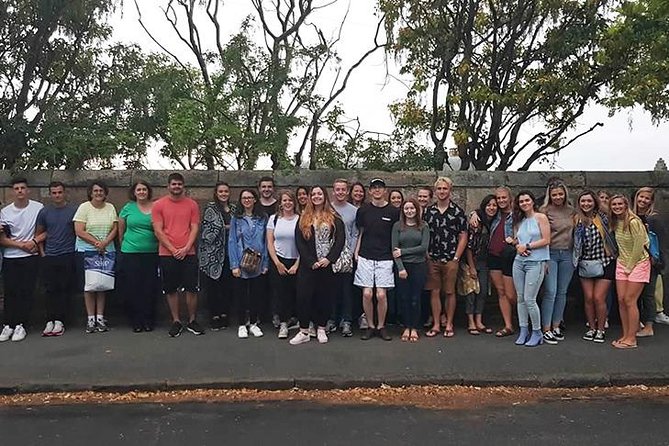
At $27.78 per person, this is a modest way to get your bearings in St Andrews. You are not paying for entry to the cathedral, castle, or Old Course, because those stops are viewed from the route rather than visited as separate ticketed attractions. What you are buying is the guide’s explanation, the route between the landmarks, and access to parts of the Old Course that are difficult to understand from a distance.
That matters in St Andrews. The town’s key sights are spread across a compact area, but their stories overlap in ways that are easy to miss on your own. The cathedral explains the town’s religious importance. The university explains its intellectual life. The castle shows the power struggles of the bishops. The Old Course connects the town to the long development of golf.
The tour has a maximum of 20 people. That is small enough for a guide to address the group without shouting, though the experience will feel more personal if your departure has fewer people. One small group described in the feedback had seven people, which is a comfortable size for questions and photographs.
The tour is booked, on average, 67 days ahead. That suggests you should reserve early if your dates are fixed, especially if you want a particular departure time. Choice of departure times also helps you fit the walk around a castle visit, lunch, or a longer trip from Edinburgh.
More St Andrews and Fife day trips:
- St Andrews Must-Sees Daily Walking Tour (11am & 2pm)
★ 5.0 · 478 reviews - St Andrews: Golf Origins and Old Course History Tour
★ 4.7 · 322 reviews - St Andrews: Top Sights Guided Walking Tour
★ 4.7 · 223 reviews
Starting at T-Squared Social on North Street
Meet your guide at T-Squared Social, 117 North Street. The venue is a new bar and restaurant associated with Tiger Woods and Justin Timberlake, with virtual golf and other sporting activities inside. It is an unusual starting point, since the tour quickly moves from modern sports entertainment to medieval St Andrews.
The meeting point is central and easy to recognize from the address. You should arrive ready to walk, rather than treating the first stop as a place to settle in. Since there is nowhere to store belongings during the tour, leave golf clubs, large bags, strollers, and walking equipment elsewhere before you arrive.
The guide sets the tone here. Richard is the name most closely associated with the strongest feedback, and his background gives the golf discussion a local angle. He is not simply pointing at the Old Course and naming famous holes. He can connect the course to the people who shaped the game, including Tom Morris and Allan Robertson.
The University of St Andrews and St Salvator’s College
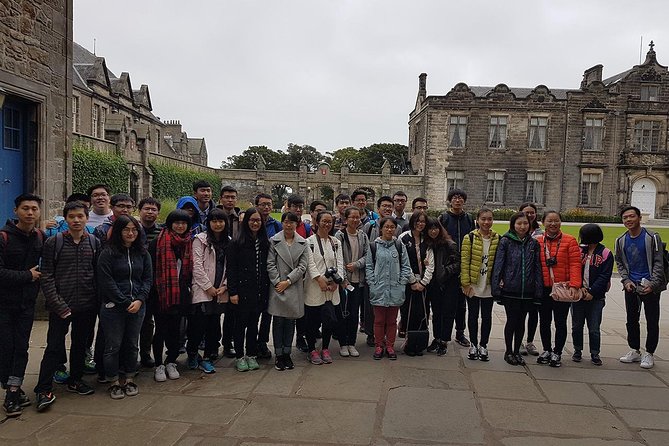
The first major historical stop is the University of St Andrews, founded in 1413. It is Scotland’s oldest university, and the tour introduces you to St Salvator’s College and the University Chapel.
You spend about 10 minutes here, so this is an orientation rather than a full campus visit. The value is in seeing how closely the university sits within the town. St Andrews does not separate its academic life from its older streets and religious buildings. The result is a town where students, medieval ruins, and golf landmarks all occupy the same small setting.
I like this part because it keeps the tour from becoming a single-subject golf pilgrimage. You get a sense of why St Andrews mattered long before the modern game became its calling card. If you want to tour university interiors in detail, you will need extra time before or after this walk, since the visit itself is brief.
The guide’s delivery is important here. The best feedback describes a clear speaker with humor and a knack for selecting the right amount of information. One complaint described a guide as impatient, so do not expect every departure to move at exactly the same pace. If you need frequent pauses, this may not be the right activity.
Cathedral ruins and the old golfing names
The tour then reaches St Andrews Cathedral, where you spend about 20 minutes. The cathedral is now an atmospheric ruin, with broken walls and an ancient cemetery that make the site feel much larger than a quick photograph suggests.
This is one of the strongest stops for non-golfers. The guide explains the cathedral’s importance and gives you time to take in the remains. You also hear about golfing figures connected with the area, including Old and Young Tom Morris, Allan Robertson, and Jamie Anderson.
That combination is one of the walk’s best ideas. Golf in St Andrews is not treated as a separate attraction floating outside the town. The stories of the early players sit beside religious buildings and local burial grounds, giving you a more human picture of the place.
You do not receive a separate admission visit inside the cathedral as part of this experience. The stop is about the exterior ruins, nearby historic ground, and the guide’s account. If you want a full look at the cathedral site, its opening arrangements and any admission charges should be checked separately.
More historic sites in St Andrews:
- St Andrews: Town, Golf, and Old Course History Tour
★ 4.7 · 162 reviews - St Andrews Old Course History Tour, for the Golfer
★ 4.5 · 150 reviews - St Andrews History Tours
★ 5.0 · 41 reviews - St Andrews: 90-Minute Historical Walking Tour
★ 4.8 · 23 reviews
St Andrews Castle and the road toward the Old Course
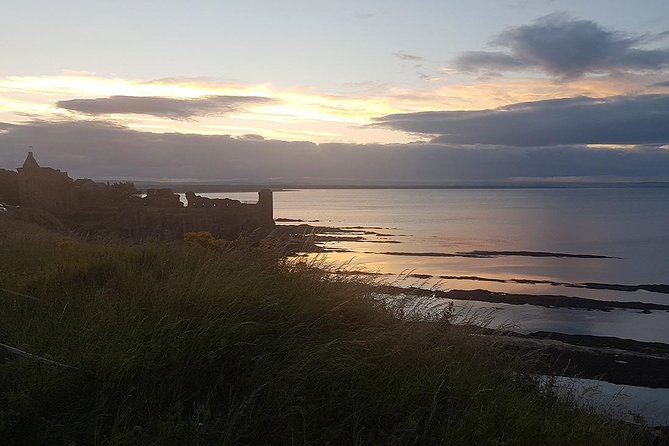
Next comes St Andrews Castle, once a bishops’ palace. The stop lasts around 10 minutes, followed by the walk toward the Old Course.
The castle helps explain the authority held by St Andrews religious leaders and the conflicts that shaped the town. Even if you have only a short time in the city, seeing the castle and cathedral together gives you a stronger sense of the old religious center than visiting either one alone.
As you walk onward, the subject shifts toward golf. The guide discusses Tom Morris, Allan Robertson, and the origins of the Open Championship. This is where the route starts to show how local personalities and St Andrews traditions helped shape golf beyond the town itself.
The transition also shows why a walking tour is useful here. You are not being driven between unrelated sights. You move through the same streets that connect the old religious center with the links, while the story changes naturally from bishops and cathedrals to clubs, caddies, and championships.
Forty minutes beside the Old Course
The longest stop is the Old Course, with about 40 minutes devoted to its development and nearby landmarks. For many people, this is the reason to book, but it is worth knowing exactly what the experience is and is not.
You do not play the Old Course. Instead, you learn how the course evolved, see its adjoining landmarks, and walk across the 1st and 18th fairway area when conditions allow. The course remains active, so you must watch for golf balls and follow the guide’s safety instructions. Crossing is done at your own risk.
For an avid golfer, this can be a powerful moment even without a tee time. You can stand near the teeing areas, look across the fairways, and connect famous names and golfing traditions to the physical ground. One golfer described the pleasure of walking on the fairways and standing by the tee boxes despite not playing a round.
The course is also accessible in a different way for people who do not play. The guide explains the evolution of golf and the Old Course in plain terms, so you do not need a detailed grasp of golf architecture to follow along. The tour’s strongest feature is its balance: the golf portion is substantial, but the cathedral, castle, and university keep the walk from feeling like a technical course inspection.
You should allow for live play to affect the route. The Old Course is not a museum, and golfers may be using the fairways. That gives the visit energy, but it also means you cannot assume every area will be open or safe to cross at every moment.
Finishing at Swilcan Bridge
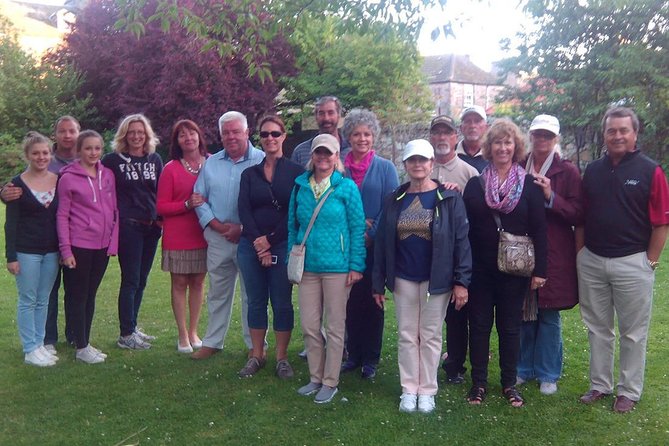
The tour ends at Swilcan Bridge on the Old Course, near the center of St Andrews golf culture. You get time for photographs and hear about nearby landmark buildings before the walk ends at 17 The Links.
This is the natural finish. After learning about the early game and the course’s development, you arrive at one of its most recognizable photo spots. The bridge is small, but its fame comes from the number of golfers who have crossed it and posed there over the years.
The stop is not available in the same way on tournament days. Check the date carefully if the bridge photo is important to you. On a normal day, it gives the tour a clear ending rather than leaving you somewhere along the route.
One practical benefit is the location. You finish right beside the Old Course, not back at the original meeting point. That makes it easy to continue exploring the links, find food, or visit nearby sights. A guide has recommended Jiggers fish and chips near the 17th hole, a useful suggestion if you want to keep the golf theme going after the walk.
Sunday may be particularly appealing. No golf is played on the Old Course that day, and the course becomes a public park, allowing you to walk more of it after the guided tour. The tour itself still lasts about 1 hour 45 minutes, but Sunday can give you extra freedom afterward.
The guides and the quality of the storytelling

The guide is the main reason this tour earns its price. Richard receives the clearest praise and is described as a local resident, author, historian, former caddie, and entertaining speaker. He has written seven or more books about St Andrews, according to the information supplied, and his strength is explaining golf without losing the town’s wider story.
His role also includes practical help. He has taken photographs for people during the walk and offered ideas for what to do afterward. That kind of local guidance can be more useful than another string of dates and names.
Guide assignments can vary. Names such as Jonathon and Mathis also appear in the feedback, so you should not assume Richard will lead every departure. The overall format remains the same, but the pace, humor, and emphasis may change with the individual guide.
The score is 4.9 out of 5 from 138 ratings, with 99 percent recommending the experience. That is unusually strong, but the less favorable comments are useful. One participant left after needing a restroom break and feeling unable to get directions for rejoining. The lesson is simple: use facilities before the tour, and ask about the nearest option at the start if you may need one.
Walking demands, language, and family suitability
This is a walking tour at a moderate to brisk pace. It is not suitable for people with walking difficulties, hip or knee problems, sprained ankles, walking frames, crutches, or mobility scooters. Baby strollers and carriages are also not suitable.
You need a fluent command of English. The tour does not work well if you rely on slow speech or on translating during the walk, since the guide’s explanations continue while the group moves between stops.
Children under five can join free, while the activity is not suitable for children under two. Service animals are allowed, and the starting area is near public transportation.
Weather matters. If poor weather causes cancellation, you can choose another date or receive a full refund. If you cancel yourself, do so at least 24 hours before the start time for a full refund. Changes or cancellations inside that window are not accepted.
Wear shoes suited to walking and come prepared for exposed conditions near the links. The supplied information does not promise indoor shelter or storage, so plan on carrying only what you need.
Who should book this St Andrews experience?
I would choose this tour if you have one day in St Andrews and want a strong first orientation. It works especially well for a mixed group, since the golfers get the Old Course while everyone else gets the university, cathedral, castle, and town story.
It is also a good choice if you have not secured an Old Course tee time. You still reach the course, walk across parts of the playing area when permitted, hear how it developed, and finish at Swilcan Bridge. That is not a substitute for playing, but it is far more useful than viewing the course only from a road.
I would be cautious if you want a slow, flexible walk with frequent breaks. The route packs several sites into 1 hour 45 minutes, and the guide may need to keep moving. I would also skip it if you have mobility limits or cannot follow fluent English commentary.
The price makes sense for the route and the guide’s local expertise. You are paying less for formal access and more for a well-shaped story that saves you from piecing St Andrews together on your own. With a guide such as Richard, the golf details become more vivid, while the cathedral and university keep the experience worthwhile for people who do not follow golf.
Should you book the Town, Golf and Old Course History tour?
Book it if you want a compact introduction to St Andrews with a serious focus on both town history and golf. Try for a Sunday if walking the Old Course matters most, and reserve ahead if your schedule is fixed.
Skip it if you need a slow pace, stroller access, luggage storage, or a fully accessible route. For everyone else, $27.78 is fair value, particularly when you treat the tour as the starting point for a longer afternoon around the cathedral, castle, university, and links.
FAQ
How long does the St Andrews walking tour last?
The tour lasts approximately 1 hour and 45 minutes.
Where does the tour start and finish?
It starts at T-Squared Social, 117 North Street, St Andrews, and ends at Swilcan Bridge on the Old Course, at 17 The Links.
Is the Old Course included?
The tour takes you beside the Old Course and includes walking across the 1st and 18th fairway area when permitted. You do not play a round of golf, and crossing the course is at your own risk.
Is the tour suitable for people who do not play golf?
Yes. The route also covers the University of St Andrews, St Salvator’s College, the cathedral ruins, the cemetery, and St Andrews Castle.
Can children join the tour?
Children under five can join free. The activity is not suitable for children under two.
What happens if bad weather cancels the tour?
You will be offered a different date or a full refund if the experience is canceled because of poor weather. You can also cancel for a full refund if you do so at least 24 hours before the start time.
Just added around St Andrews
- Barrel-top whisky tasting in St Andrews★ 5.0 · 20 reviews
- St Andrews: 90-Minute Historical Walking Tour★ 4.8 · 23 reviews
- St Andrews: Town Highlights Private Guided Walking Tour★ 4.9 · 25 reviews
- St Andrews: Guided Walking Tour, 12pm, 2pm daily★ 5.0 · 28 reviews
- Bespoke Private Tours of Scotland and the Borders★ 5.0 · 29 reviews
- Private St. Andrews Tour with Dedicated Local Guide★ 5.0 · 38 reviews
- Watch Building Experience – St Andrews★ 5.0 · 40 reviews
- St Andrews History Tours★ 5.0 · 41 reviews
St Andrews & Fife Day Trips, compared.

St Andrews & the Fishing Villages of Fife Small-Group Day Tour from Edinburgh
Read our review →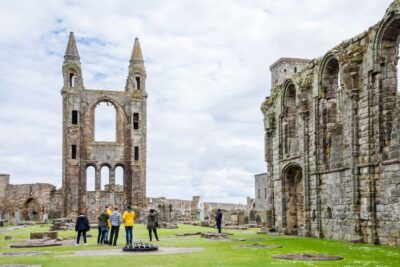
Rosslyn Chapel, Dunfermline Abbey and Stirling Castle Day Tour
Read our review →
St Andrews Must-Sees Daily Walking Tour (11am & 2pm)
Read our review →
Rosslyn Chapel, Stirling Castle & Dunfermline Abbey Tour
Read our review →
Browse the lists this tour appears in