
Reviewed · ST ANDREWS & FIFE DAY TRIPS
St Andrews Old Course History Tour, for the Golfer
The best part of this St Andrews Old Course History Tour is the chance to see the course through a former caddie’s eyes. Richard leads a small shared group through the town, links, and key holes, mixing golf history with stories from years around the Old Course.
I like the rare walk near the 1st and 18th fairways, and I like that the tour works for non-golfers as well as serious players. The included photos on Swilcan Bridge are a useful bonus. The main drawback is the pace: Richard can speak quickly, and you need a fluent command of English to follow the full talk.
In This Review
- Key points to know before booking
- Why this short walk matters at St Andrews
- Start at Hotel du Vin and get the town’s backstory
- The Links and the road to modern golf
- The R&A and the Old Course’s changing shape
- Grannie Clark’s Wynd and the course’s expansion
- Rusacks, the first tee, and the 18th green
- Swilcan Bridge and the photo moment
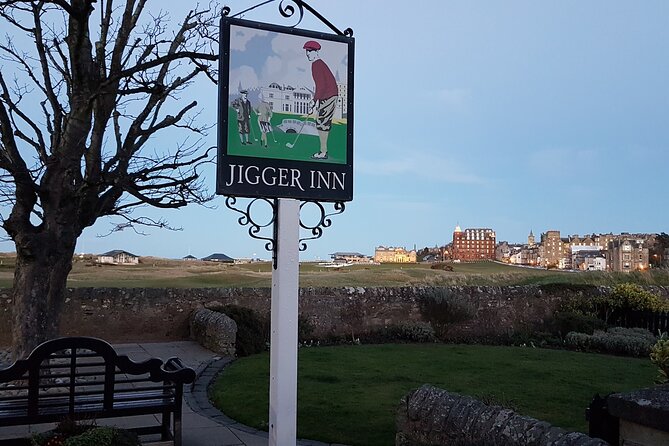
- The Road Hole and a finish at the Jigger Inn
- The guide’s pace and the English requirement
- Who should book this Old Course walk?
- Timing, weather, and cancellation details
- Is the $25 price good value?
- Should you book the St Andrews Old Course History Tour?
- FAQ
- How long does the Old Course History Tour last?
- Where does the tour start?
- Where does the tour finish?
- Is food or drink included?
- Are photos at Swilcan Bridge included?
- How many people can join the public tour?
- Is the tour suitable for children?
- Is the tour accessible for strollers or mobility equipment?
- Do I need to speak fluent English?
- Can I cancel for a refund?
Key points to know before booking
- Former caddie guide: Richard brings personal experience and plenty of stories about the Old Course, its players, caddies, and famous holes.
- A compact 75-minute route: You cover the town’s golf background, the Links, the R&A, the 1st and 18th holes, Swilcan Bridge, and the Road Hole.
- Swilcan Bridge photos included: The guide takes professional photos, except on tournament days when access may be restricted.
- Good for mixed groups: Golfers get course insight, while non-golfers get local history, famous landmarks, and a pleasant walk.
- Small public group: The maximum is 15 people, which gives you a better chance to hear and ask questions than on a large coach tour.
- Come prepared for the coast: Weather can change fast, and you need comfortable walking shoes and warm layers.
Why this short walk matters at St Andrews
St Andrews is not simply a place with an old golf course. It is where the game’s past is visible in ordinary streets, open links, old clubhouses, hotel walls, and the narrow route between the first tee and final green.
This tour gives you a useful introduction before you wander around on your own. In about an hour and 15 minutes, you learn how the town connects to the game, how the Old Course changed over time, and why familiar golf features such as bunkers, fairways, and putting greens developed as they did.
I especially like the way the walk links golf with local history. The opening discussion begins with the story of St Andrews and the 1123 Links charter, then moves into the origins of golf itself. That gives the Old Course a setting instead of treating it like an isolated sports venue.
At $25 per person, the price is reasonable for a small-group experience with a professional local guide and included photographs. You are paying for interpretation, not an admission ticket to a museum or a round of golf. The value depends on how much you want the stories and course context. If you only want to take a quick photo at Swilcan Bridge, you can see public areas on your own. If you want to understand what you are looking at, the guide earns the fee.
More St Andrews and Fife day trips:
- St Andrews Must-Sees Daily Walking Tour (11am & 2pm)
★ 5.0 · 478 reviews - St Andrews: Golf Origins and Old Course History Tour
★ 4.7 · 322 reviews - St Andrews: Top Sights Guided Walking Tour
★ 4.7 · 223 reviews
Start at Hotel du Vin and get the town’s backstory

Meet Richard outside Hotel du Vin St Andrews at 40 The Scores. This is the only formal meeting point, so arrive early. The public tour does not wait for late arrivals, and the opening talk sets up much of what follows.
The first five minutes provide an overview of St Andrews and lead toward the Links charter of 1123. It is a brisk beginning, but it helps you see that the golf story is part of a much older town story.
This first stop is also a practical warning about the tour’s style. Richard has a set route and a lot to cover. Several people have found him funny and engaging, but some have found his delivery rapid or felt that he followed his own agenda rather than stopping often for questions.
If you have hearing concerns, stay close to the guide. On one tour, ear buds helped the group hear him clearly, though this should not be treated as a guaranteed feature. At the start, make sure you are positioned where you can hear before the group moves off.
The Links and the road to modern golf
The next stop takes you onto the Links, where the tour explains how golf developed from early stick-and-ball games in the Low Countries, through Edinburgh in 1744, and into the form associated with St Andrews.
This section is useful even if you do not play golf. You hear why St Andrews is called the Home of Golf, but you also get a simple explanation of how a pastime became an organized game with rules, clubs, courses, and competitions.
Golfers will likely enjoy the connection between early play and the course you are about to see. Non-golfers may appreciate the broad outline without needing to know club types or tournament records beforehand.
The walk is not a long physical challenge, but it is outdoors and exposed. The coast can feel cold when weather shifts, so bring a waterproof jacket and an extra layer. The guide keeps a comfortable pace with frequent stops, but this is still a walking tour over public streets and open course areas.
The R&A and the Old Course’s changing shape
At the Royal & Ancient Golf Club of St Andrews, Richard explains how the Old Course helped shape golf and how the course itself changed as the game developed.
This is where the experience becomes more than a photo stop. You hear about the origins of fairways and bunkers, important golfing moments, Old Tom, and the old caddie shack. The stories help explain why the Old Course looks and plays as it does rather than presenting every feature as if it appeared fully formed.
Old Tom Morris is an important figure in the course’s development, and the tour uses him to connect design changes with the practical needs of golfers. You also hear about the caddies whose work has long been tied to the course.
For a serious golfer, this section gives meaning to familiar terms and famous places. For a family member who does not play, the caddie stories and local characters provide a human angle. That balance is one of the tour’s strengths.
The guide’s personal experience is central here. Richard’s background as a retired Old Course caddie gives his stories a practical feel, especially when he discusses how the course worked in earlier years and how people moved around it.
More historic sites in St Andrews:
- St Andrews: Town, Golf, and Old Course History Tour
★ 4.7 · 162 reviews - St Andrews Tours: Town, Golf and Old Course History
★ 5.0 · 138 reviews - St Andrews History Tours
★ 5.0 · 41 reviews - St Andrews: 90-Minute Historical Walking Tour
★ 4.8 · 23 reviews
Grannie Clark’s Wynd and the course’s expansion
Grannie Clark’s Wynd brings you into the story of the Old Course as a changing place. Richard covers the Open Championship, the Dunhill Cup, and the development from 12 holes to 10 and eventually 18.
This part is valuable because many people arrive with a fixed idea of the Old Course as something that has never changed. In reality, the course has been adjusted as the game became more formal and competitive.
You also hear about important points around the full 18-hole route. The tour does not take you out to play every hole, of course, but it gives you a mental map of the course and explains why certain spots matter.
The information comes quickly, so this is a good place to ask a short question if the group has time. Do not expect a slow classroom lecture. The experience works best when you listen closely, take in the key facts, and save a few minutes afterward to explore the town or watch play from permitted public areas.
Rusacks, the first tee, and the 18th green
Near Rusacks St Andrews, the route focuses on the 1st and 18th fairway, the role of farmers, the hotel, the Mannings, the original first tee, and the 18th hole.
This is one of the most memorable parts for golfers because you see the famous opening and closing areas side by side. The Old Course’s first tee and 18th green are unusually close together, and the tour helps you understand how that shared space works.
The story of the early caddies and local women also leads to one of the tour’s more distinctive details: how Old Tom created what is described as the world’s first putting green. It is a small story, but it shows how the course grew from local use and practical needs rather than from a single master plan.
You may be able to walk across or near the fairway when play allows. This is not a promise of unrestricted access. Marshals control movement, and you must follow their instructions. Tournament days bring extra limits, and the Swilcan Bridge photo stop is excluded during Dunhill, Open, and similar events.
If you are hoping to play the Old Course, keep your expectations clear. This experience is a history walk, not a tee time, course tour for golfers carrying clubs, or substitute for a round. It does, however, give you a much better sense of the famous holes before you watch or play elsewhere.
Swilcan Bridge and the photo moment
Swilcan Bridge is the visual high point of the tour. The small stone bridge has become one of golf’s most recognizable landmarks, and you get time for photographs there.
Professional photos are included, except on tournament days. Richard also shares his own pictures and takes photos for the group, according to the tour arrangement. This saves you from handing your phone to a stranger and gives couples and families a better chance of getting a complete shot.
The bridge can feel busy, especially when other people are taking turns. The guide aims to keep the tour moving rather than spend too long waiting for perfect lighting or an empty background. That is sensible for a 75-minute walk, though anyone seeking a long private photo session may find the time limited.
The bridge is also not the whole experience. It is easy to focus on the famous pose and miss the setting: the 1st tee nearby, the final hole, the links stretching around you, and the odd spectacle of golfers beginning and finishing rounds in the same small area.
Access can change with course activity. Tournament days are specifically excluded for the included photo opportunity, and ordinary play can also affect where you may walk. Check the conditions when booking and follow the marshal’s instructions on the day.
The Road Hole and a finish at the Jigger Inn
The final section takes you toward the Road Hole, the 17th green, and the Jigger Inn. Richard covers famous and sometimes jaw-dropping moments associated with this difficult hole before ending near the inn.
This makes a good finish because you leave with one of golf’s best-known holes still fresh in your mind. The Road Hole has a reputation built on risk, precision, and memorable mistakes, and the guide’s stories bring those moments to life without requiring you to know every tournament result.
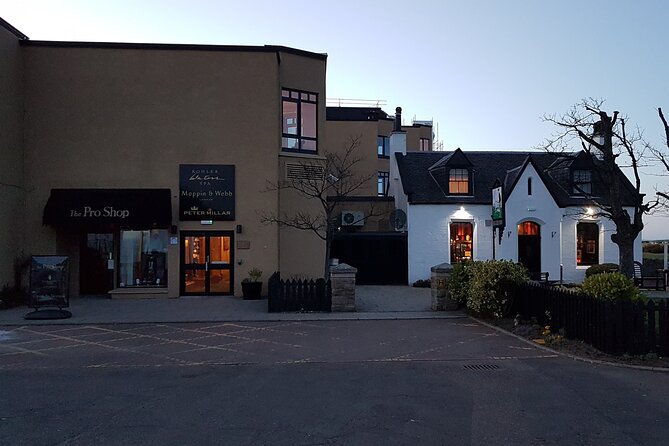
The tour ends near the Jigger Inn, beside the 17th fairway. Food and drinks are not included, but you can stay for refreshments if you like. One useful tip from the experience is to ask Richard for local advice about where to eat. He has been credited with steering people toward good fish and chips at the Jigger Inn.
Plan this stop into your day rather than treating it as a hard departure point. You may want to sit with a drink, watch golfers near the 17th, or continue exploring St Andrews afterward. The official walking time is about 75 minutes, but your overall visit can last longer if you use the finish as a break.
The guide’s pace and the English requirement
Richard is the named guide in the tour details, and his strongest asset is his experience around the Old Course. His stories include local history, golf history, caddies, course changes, and personal memories. He also adds humor, which keeps a large amount of information from feeling like a lecture.
The tradeoff is pace. Some people have found him very fast and wished he paused more for questions. The tour clearly requires a fluent command of English, and translating or speaking slowly does not solve the problem. If English is not your first language, this may not be the right way to learn the course.
A small group of up to 15 helps, but it does not turn the walk into a private lesson. If you want a slower schedule or a route built around your family’s questions, the private St Andrews Old Course History Tour would be the better format.
The guide usually keeps the walk moving while stopping at key points. That suits you if you want a compact introduction before sightseeing elsewhere. It may disappoint you if you prefer long pauses, detailed discussion of every hole, or a leisurely photography tour.
Who should book this Old Course walk?
I would choose this tour for:
- Golfers making a first visit to St Andrews, especially those who want course context before watching or playing.
- Partners and family members who do not play, since the town history and people behind the course make the walk accessible.
- History-minded visitors, because the tour connects local development with the growth of golf.
- People short on time, since the route covers major sights in roughly 75 minutes.
- Small groups, since the maximum of 15 is more personal than a large sightseeing outing.
I would think twice if you need step-free access, use a stroller, crutches, a walking frame, or a mobility scooter. There is nowhere to leave those items during the tour, and the route is not suitable for them. The walk is also not recommended for children under five or for anyone recovering from a new knee or hip replacement, a sprained ankle, or a similar injury.
Service animals are allowed, and the meeting point is near public transportation. Bring no golf clubs or bulky gear unless you have made another arrangement for storage.
Timing, weather, and cancellation details
The tour is offered in English, uses a mobile ticket, and is often booked well ahead, with an average booking lead time of about 61 days. That does not mean every date sells out, but it is sensible to reserve early if your Scotland plans are fixed.
Arrive before the start time at Hotel du Vin. The shared tour will not wait for late arrivals, and missing the opening section means losing the town background that frames the rest of the route.
The experience depends on good weather. If poor weather forces cancellation, you are offered another date or a full refund. You can also cancel up to 24 hours before the start for a full refund. Changes or cancellations inside that 24-hour window are not accepted, and the local time controls the cut-off.
The tour also needs a minimum number of participants. If that minimum is not reached, you are offered another date or experience, or a full refund.
Is the $25 price good value?
At $25, this is a modest outlay for a local guide, a small group, a structured route, and professional photos at Swilcan Bridge.
The price is strongest when you care about interpretation. You could walk around public parts of St Andrews and see some of the same areas without paying, provided you do not interrupt play. What you would miss is the order of the story: the charter, early golf, course design, caddies, famous competitions, the first tee, the 18th green, and the Road Hole.
The tour also saves research time. You do not need to assemble a reading list before arriving, and you get a local explanation while standing in the places being discussed. For a golfer who has dreamed of visiting St Andrews, that context can make the short walk feel worthwhile.
The price is less compelling if you already know the course well, dislike guided commentary, or mainly want private time for photographs. In that case, walk the public areas on your own and spend the money on food or a longer local visit.
Should you book the St Andrews Old Course History Tour?
Book it if you want a short, story-led introduction to the Old Course and you can follow fast English speech. Richard’s former caddie experience, the route around the 1st and 18th holes, and the Swilcan Bridge photographs give the tour more substance than a quick landmark stop.
It is especially useful for a mixed group. The golfer gets course details and famous moments, while the non-golfer gets St Andrews history, local characters, and a pleasant walk through an iconic setting.
Skip it if you need accessible transport, a very slow pace, or a private guide who will build the visit around questions. Also check for tournament restrictions before booking if Swilcan Bridge photos are a major reason for choosing it.
For most first-time visitors who have a genuine interest in golf or St Andrews, $25 is a fair price for a compact lesson in why this place matters.
FAQ
How long does the Old Course History Tour last?
The tour lasts approximately 1 hour and 15 minutes.
Where does the tour start?
It starts outside Hotel du Vin St Andrews at 40 The Scores, St Andrews, KY16 9AS, United Kingdom.
Where does the tour finish?
It finishes near the Road Hole and the Old Course Jigger Inn, close to the 17th fairway and Swilcan Bridge area.
Is food or drink included?
No. The tour finishes near the Jigger Inn, where you can purchase food and drinks separately.
Are photos at Swilcan Bridge included?
Yes. Professionally taken photos at Swilcan Bridge are included, except on tournament days such as the Dunhill or Open.
How many people can join the public tour?
The tour has a maximum of 15 participants.
Is the tour suitable for children?
It is not suitable for children under five.
Is the tour accessible for strollers or mobility equipment?
No. The tour is not suitable for strollers, crutches, walking frames, or mobility scooters. There is nowhere to leave those items during the walk.
Do I need to speak fluent English?
Yes. A fluent command of English is essential because the guide speaks at a normal tour pace, and translating or speaking slowly does not work for this experience.
Can I cancel for a refund?
You can cancel at least 24 hours before the start time for a full refund. Cancellations or changes made less than 24 hours before the start are not accepted.
Just added around St Andrews
- Barrel-top whisky tasting in St Andrews★ 5.0 · 20 reviews
- St Andrews: 90-Minute Historical Walking Tour★ 4.8 · 23 reviews
- St Andrews: Town Highlights Private Guided Walking Tour★ 4.9 · 25 reviews
- St Andrews: Guided Walking Tour, 12pm, 2pm daily★ 5.0 · 28 reviews
- Bespoke Private Tours of Scotland and the Borders★ 5.0 · 29 reviews
- Private St. Andrews Tour with Dedicated Local Guide★ 5.0 · 38 reviews
- Watch Building Experience – St Andrews★ 5.0 · 40 reviews
- St Andrews History Tours★ 5.0 · 41 reviews
St Andrews & Fife Day Trips, compared.

St Andrews & the Fishing Villages of Fife Small-Group Day Tour from Edinburgh
Read our review →
Rosslyn Chapel, Dunfermline Abbey and Stirling Castle Day Tour
Read our review →
St Andrews Must-Sees Daily Walking Tour (11am & 2pm)
Read our review →
Rosslyn Chapel, Stirling Castle & Dunfermline Abbey Tour
Read our review →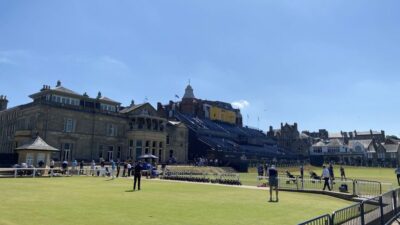
Browse the lists this tour appears in