
Reviewed · ST ANDREWS & FIFE DAY TRIPS
St Andrews History Tours
The most intriguing part of this St Andrews walking tour is not golf. It is the town’s darker past, including cathedral power struggles, ghostly legends, royal visitors, and a lost treasure that kept the town and university searching for 50 years. Historian Richard Falconer ties these stories to the streets, ruins, and old buildings around you.
I like the small, private format because Richard can answer questions and adjust the talk to your interests. I also like the unusual route, which includes the quiet harbour, St Mary’s College, and the old pilgrim entrance at The Pends, not just the famous cathedral and castle.
The main consideration is the walking. The tour lasts about 90 minutes, takes place outdoors, and is not suitable for people who need to move slowly. You also need to understand English well, and poor weather can lead to a new date or a full refund.
In This Review
- Key points to know before you book
- A different way to meet St Andrews
- St Mary’s College and the university’s older quarters
- St Leonards School and a royal connection
- The Pends and the old route into town
- The harbour most short visits miss
- St Andrews Cathedral and the lost treasure
- The bishop’s castle and the Scottish Reformation
- Thirty minutes with Scotland’s oldest university
- What Richard Falconer adds
- Is $20.59 good value for 90 minutes?
- Who should book this St Andrews tour?
- Should you book it?
- FAQ
- Where does the St Andrews history tour begin?
- What time does the tour start?
- Where does the tour finish?
- How long does the tour last?
- Is this a private tour?
- Who guides the tour?
- Is the tour suitable for people with walking difficulties?
- What is the cancellation policy?
Key points to know before you book
- Richard Falconer leads the walk: Expect a guide who focuses on specialist St Andrews stories, answers questions, and brings local buildings to life.
- The lost cathedral treasure is a central tale: You hear how the search continued for five decades, adding a curious mystery to the cathedral visit.
- The route reaches beyond the golf story: St Mary’s College, St Leonards School, The Pends, and the harbour show different sides of town.
- It is a private activity: Only your own group takes part, giving you more room to ask questions and set the pace within the tour’s walking demands.
- The tour includes Scotland’s oldest university: You explore historic quarters of the University of St Andrews and learn how the institution shaped the town.
- The price is modest for a private guide: At $20.59 per person, the value is strongest when you want context rather than a quick list of sights.
A different way to meet St Andrews
St Andrews is easy to reduce to two things: golf and a picturesque university town. This tour gives you a better sense of the place as an old religious centre, a royal setting, a fishing town, and a university community.
The route brings together several parts of town that can feel disconnected when you walk alone. A college, school, cathedral, harbour, castle, and university court each tell a different story. Richard’s role is to connect them, so you understand why St Andrews developed as it did.
The tone also leans toward the unusual. You hear about the dark side of local life, legends linked with ghosts, and the long search for cathedral treasure. This is not a dry architecture walk. At the same time, it is not presented as a pure ghost tour. The supernatural material is set within the town’s documented past and old buildings.
That balance will suit you if you want history with a little suspense. If you prefer a tour devoted only to golf, architecture, or religious history, the broad mix may feel less focused.
More St Andrews and Fife day trips:
- St Andrews Must-Sees Daily Walking Tour (11am & 2pm)
★ 5.0 · 478 reviews - St Andrews: Golf Origins and Old Course History Tour
★ 4.7 · 322 reviews - St Andrews: Top Sights Guided Walking Tour
★ 4.7 · 223 reviews
St Mary’s College and the university’s older quarters
The tour begins at The Bothy St Andrews in Church Square at 2:00 pm. From there, you head toward St Mary’s College, described as the university’s third college, built in 1538 to combat heresy.
This is one of the quieter parts of the route. You get a look at a less obvious side of the University of St Andrews instead of beginning with the town’s biggest ruins. The stop is brief, about five minutes, but it gives Richard a chance to explain how religious conflict shaped education in Scotland.
For you, the value here is context. St Andrews was not simply a place where students gathered. Its colleges were created in response to major religious pressures, and St Mary’s College reflects that period. The setting also gives the walk an early sense of age without the crowds and drama of the cathedral site.
The university appears again near the end of the tour, with about 30 minutes devoted to its historic quarters and architecture. That longer section should appeal to anyone interested in how an old university fits into an old town. You are not just looking at one building. You are learning about the institution as part of St Andrews itself.
The tour information does not promise entry into every university building. Think of this as a guided look at historic quarters and architecture, with Richard supplying the background that signs and plaques often leave out.
St Leonards School and a royal connection
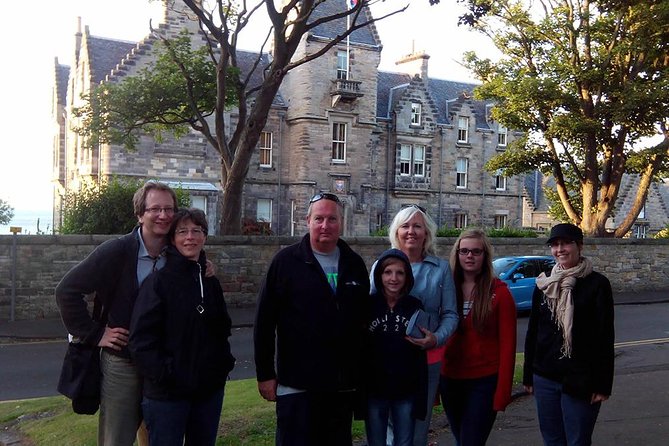
The next short stop is St Leonards School, a private school described as one of Scotland’s top schools and among the best in the world. The Queen Mother attended primary school there, giving the site a clear royal link.
You spend about five minutes here, so this is not a full school visit. It is a compact local story that shows how St Andrews has attracted important institutions and notable people beyond the cathedral and university.
I like stops such as this because they break up the usual old-town sequence. You get a glimpse of the town’s continuing role in education, not just its medieval past. Richard can also place the royal connection within the wider story of St Andrews and its well-known inhabitants.
The Pends and the old route into town
At The Pends, Richard explains the only entrance into St Andrews for pilgrims and the old thoroughfare through the former priory precincts. The stop takes around 10 minutes.
This is where the town’s religious importance becomes easier to picture. Pilgrims once needed a route into the cathedral precincts, and the passage helps you understand how movement through St Andrews was organised.
The Pends may not demand much time on its own, but a guide makes the difference. Without context, it can seem like another old architectural feature. With the story of pilgrims and the priory precincts, it becomes part of a larger journey through medieval St Andrews.
This stop is also useful if you want to understand the relationship between the cathedral and the surrounding town. St Andrews was not built around the cathedral by accident. Religious authority shaped streets, entrances, and daily movement.
More historic sites in St Andrews:
- St Andrews: Town, Golf, and Old Course History Tour
★ 4.7 · 162 reviews - St Andrews Old Course History Tour, for the Golfer
★ 4.5 · 150 reviews - St Andrews Tours: Town, Golf and Old Course History
★ 5.0 · 138 reviews - St Andrews: 90-Minute Historical Walking Tour
★ 4.8 · 23 reviews
The harbour most short visits miss
The walk then reaches St Andrews Harbour, an area many people skip. You spend about 10 minutes here.
The harbour adds a practical, working side to the town. After hearing about colleges, pilgrims, and bishops, you see St Andrews as an old fishing town too. That change of setting helps keep the tour from becoming a chain of church and university facts.
I especially like this stop for its contrast. The cathedral and castle explain power, religion, and conflict. The harbour points to ordinary coastal life and the town’s connection with the sea. It is also described as an area of great beauty, so you get a quieter outdoor pause in the middle of the route.
The tour does not promise a long harbour visit or time for a meal there. Treat it as a guided stop, not free time. If you want photographs, be ready to take them while Richard is speaking so you do not miss part of the story.
St Andrews Cathedral and the lost treasure
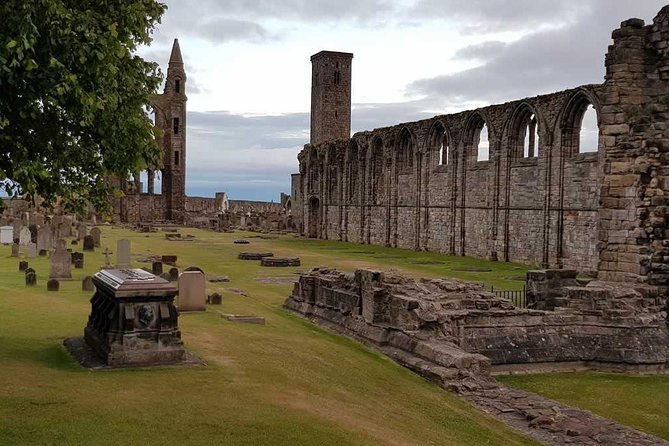
The cathedral receives the longest stop, about 30 minutes, and it is likely to be the emotional centre of the tour. Richard explains the former seat of the Catholic Church in Scotland, its power, and the events that led toward the Scottish Reformation.
The site gives you a strong sense of scale and change. You are not simply hearing about a church building. You are considering what happened when religious authority, politics, and reform collided in Scotland.
The most unusual thread is the cathedral’s lost treasure. Richard explains how the town and university searched for it for 50 years. That detail gives the cathedral story a human edge. People were not only preserving ruins or discussing old church politics. They were also looking for something believed to have disappeared.
You should expect stories and interpretation rather than a guaranteed treasure discovery. The information provided does not identify the treasure, confirm that it was found, or promise access to every part of the cathedral site. The stop is about the history of the search and the cathedral’s place in Scotland.
The cathedral is also where the tour’s darker tone works best. Stories about conflict, loss, and legends connected with ghosts fit naturally among old religious ruins. If you have already taken a ghost tour, this history walk can add useful background to places you may have seen only after dark.
The bishop’s castle and the Scottish Reformation
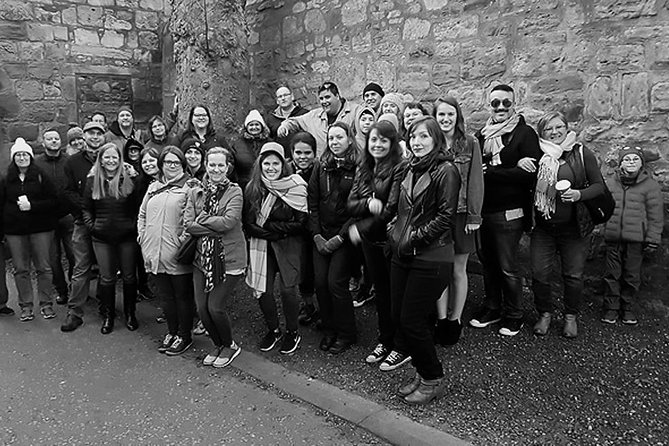
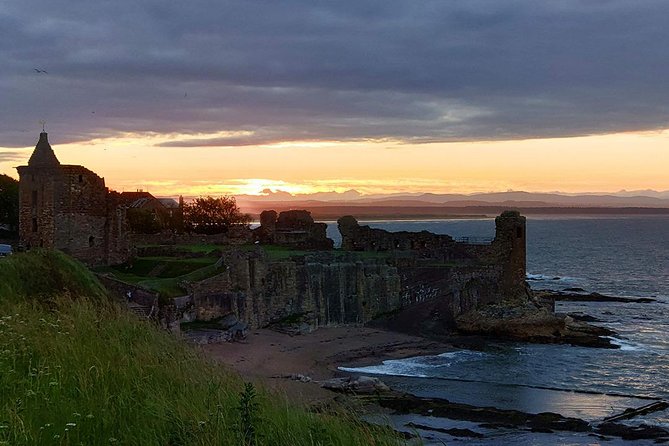
St Andrews Castle was the bishop’s palace from the 13th century. The stop lasts around five minutes, making it one of the briefest visits on the route.
The castle’s story moves from religious authority to conflict. For much of its past, the site had a spiritual purpose, but events eventually led into the Scottish Reformation. That shift gives the castle a strong connection with the cathedral and helps you see the two sites as parts of the same religious centre.
Because the stop is short, do not expect a full castle tour or a long exploration of every feature. Richard uses the site to explain its role and its place in the wider story. If you want an in-depth look at the castle’s architecture, you may need extra time on your own before or after the walk.
Still, the short stop has value. The castle works as a clear example of how bishops held both religious and political importance. It also keeps the tour moving rather than spending the full 90 minutes at only one or two famous sights.
Thirty minutes with Scotland’s oldest university
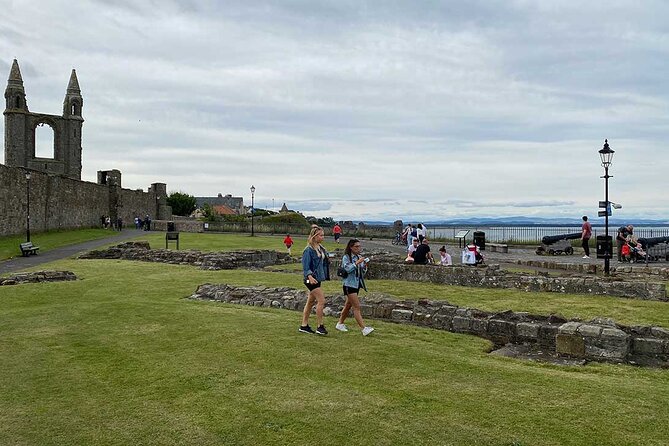
The final major section returns to the University of St Andrews. You spend about 30 minutes around its historic quarters, learning about Scotland’s oldest university, its architecture, and its unusual past.
This part should suit you if you enjoy institutions as much as monuments. Universities are living places, but in St Andrews the old buildings and traditions are woven into the town’s streets. Richard’s explanations help make sense of that relationship.
The university section also rounds out the earlier stop at St Mary’s College. You can connect the 1538 college with the larger development of the university and see how education remained central to St Andrews long after its medieval religious role changed.
The tour ends at 75 Market Street, beside the Central Bar at the top of College Street by Market Street. That is a useful finish because you are left near the centre of town rather than returned to the starting point. You can continue exploring, find food, or make your way to another local stop.
What Richard Falconer adds
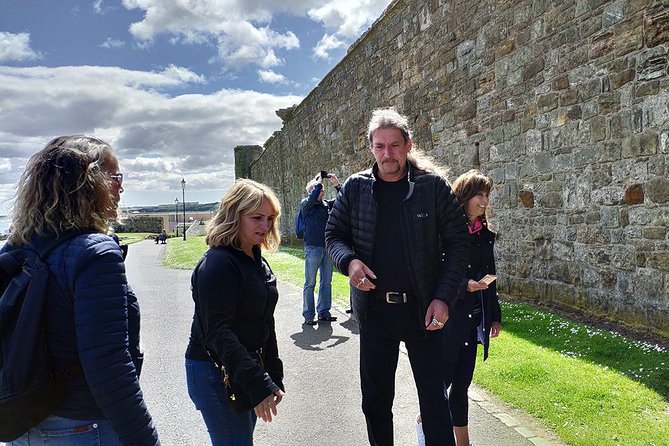
The guide is a major part of the experience. Richard Falconer is described as enthusiastic, well prepared, and able to answer questions across a wide range of St Andrews subjects. The strongest praise focuses on his specialist local information and his ability to bring the cathedral and other buildings to life.
That matters on a walking tour with several short stops. You are moving from a school to a passage, then a harbour, cathedral, castle, and university. A less capable guide could make this feel scattered. Richard’s job is to create a clear thread between them.
You should feel comfortable asking questions during a private tour. The small format means you are not competing with a large crowd to be heard. It also lets Richard spend more time on topics your group cares about, within the fixed route and 90-minute length.
The experience requires good English. That is worth taking seriously because much of its value comes from spoken stories, connections, and explanations rather than simply seeing the buildings.
Is $20.59 good value for 90 minutes?
At $20.59 per person, this is a low-cost way to add structure and local detail to a day in St Andrews. The price is particularly appealing for a private activity, since only your group participates.
The value depends on what you want from the town. If you are happy to read signs and walk between major sights, you can see many of the locations without a guide. But you will miss the fuller links between the cathedral, castle, university, harbour, and old pilgrim route.
You are also paying for a route that includes places you might not choose on your own. St Mary’s College and the harbour are useful examples. They turn the walk into a broader portrait of St Andrews rather than a short circuit of the most famous ruins.
The 90-minute length is another strength. It is long enough to cover the main sites but short enough to fit into an afternoon visit. A day trip from Edinburgh can include this tour without giving up the whole day. The walk starts at 2:00 pm, so plan your arrival in St Andrews with that fixed time in mind.
Who should book this St Andrews tour?
I would choose this tour if you want a first look at St Andrews that goes beyond golf. It suits couples, families with older children, university-history fans, and anyone drawn to religious stories, royal connections, old buildings, and local legends.
It is also a good pick if you have already taken a ghost tour. The history walk can explain the buildings and events behind the ghost stories, giving you a fuller picture of the town.
Families should note that children under five are free, but the experience is not suitable for children under two. The walking and the spoken historical content make it a better match for people who can keep up and follow English-language explanations.
You should reconsider it if you have walking difficulties, need frequent pauses, or want a tour conducted in another language. The route is outdoors, requires moderate fitness, and needs good weather. Wear practical shoes and check the forecast, since poor conditions can cause the activity to be moved or cancelled.
Should you book it?
Book this tour if you want Richard Falconer’s local stories to connect the major parts of St Andrews into one clear walk. The cathedral, lost treasure search, castle, university, harbour, and pilgrim route offer a broad mix, while the private format gives you room to ask questions.
Skip it if you want a specialist golf tour, a full indoor visit to every monument, or a slow-paced outing for people with limited mobility. For most visitors with an afternoon in town, though, $20.59 buys useful context, unusual tales, and a much better sense of why St Andrews is more than the birthplace of golf.
FAQ
Where does the St Andrews history tour begin?
The tour begins at The Bothy St Andrews, 3 Church Square, St Andrews, KY16 9NN, UK.
What time does the tour start?
The start time is 2:00 pm.
Where does the tour finish?
The tour finishes beside the Central Bar at the top of College Street by Market Street. The stated end address is 75 Market Street, St Andrews, KY16 9NU, UK.
How long does the tour last?
The tour lasts approximately 1 hour and 30 minutes.
Is this a private tour?
Yes. Only your group participates in the activity.
Who guides the tour?
The tour is led by historian Richard Falconer.
Is the tour suitable for people with walking difficulties?
No. The experience is not suitable for people who need to walk slowly, and participants should have a moderate level of physical fitness.
What is the cancellation policy?
You can cancel at least 24 hours before the start time for a full refund. Cancellations or changes made less than 24 hours before the experience are not accepted for a refund. If poor weather causes the tour to be cancelled, you can choose another date or receive a full refund.
Just added around St Andrews
- Barrel-top whisky tasting in St Andrews★ 5.0 · 20 reviews
- St Andrews: 90-Minute Historical Walking Tour★ 4.8 · 23 reviews
- St Andrews: Town Highlights Private Guided Walking Tour★ 4.9 · 25 reviews
- St Andrews: Guided Walking Tour, 12pm, 2pm daily★ 5.0 · 28 reviews
- Bespoke Private Tours of Scotland and the Borders★ 5.0 · 29 reviews
- Private St. Andrews Tour with Dedicated Local Guide★ 5.0 · 38 reviews
- Watch Building Experience – St Andrews★ 5.0 · 40 reviews
- Private St. Andrews: Home of Golf Old Course Walking Tour★ 5.0 · 69 reviews
St Andrews & Fife Day Trips, compared.

St Andrews & the Fishing Villages of Fife Small-Group Day Tour from Edinburgh
Read our review →
Rosslyn Chapel, Dunfermline Abbey and Stirling Castle Day Tour
Read our review →
St Andrews Must-Sees Daily Walking Tour (11am & 2pm)
Read our review →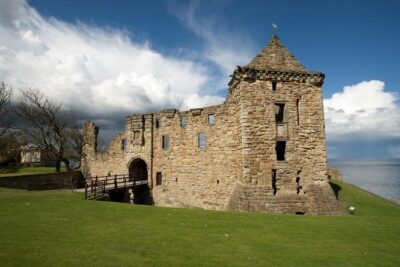
Rosslyn Chapel, Stirling Castle & Dunfermline Abbey Tour
Read our review →
Browse the lists this tour appears in