
Reviewed · STIRLING CASTLE & THE KELPIES
Stirling: Daily Guided Walking Tour (11am & 2pm)
Stirling’s story unfolds uphill, one old stone building at a time. This 1.5-hour walk links the Old Town Jail, Broad Street, Mar’s Wark, the Church of the Holy Rude, the cemetery, and Stirling Castle, giving you the city’s past before you tackle its major sights on your own.
I like the local guide’s storytelling and the way the walk explains what you are looking at, from symbols above doorways to three-hundred-year-old gravestones. I also like the modest price of $19, which is good value for a short orientation tour. The catch is Stirling’s steep hills, so comfortable shoes and a sensible pace matter.
- Follow Stirling’s historic spine: Walk from the Old Town Jail toward Stirling Castle through Broad Street and the old market area.
- Hear the human side of history: Learn about jails, punishment, local crime, royal life, and ordinary people.
- Read the buildings: Your guide points out symbols, former homes, churches, and details you could easily pass without noticing.
- See the cemetery differently: Old gravestones become clues to Stirling’s past rather than background scenery.
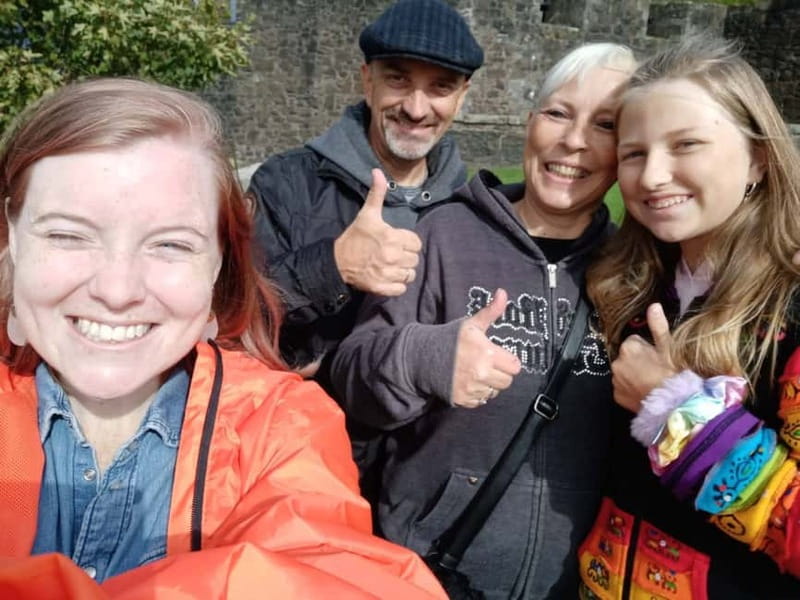
- Meet at the orange jacket: Find your guide outside Stirling Old Town Jail, arriving 5 to 10 minutes early.
- Plan around the hills: The tour is suitable for all fitness levels, but some slopes require patience and steady footwear.
In This Review
- Why Stirling is best understood on foot
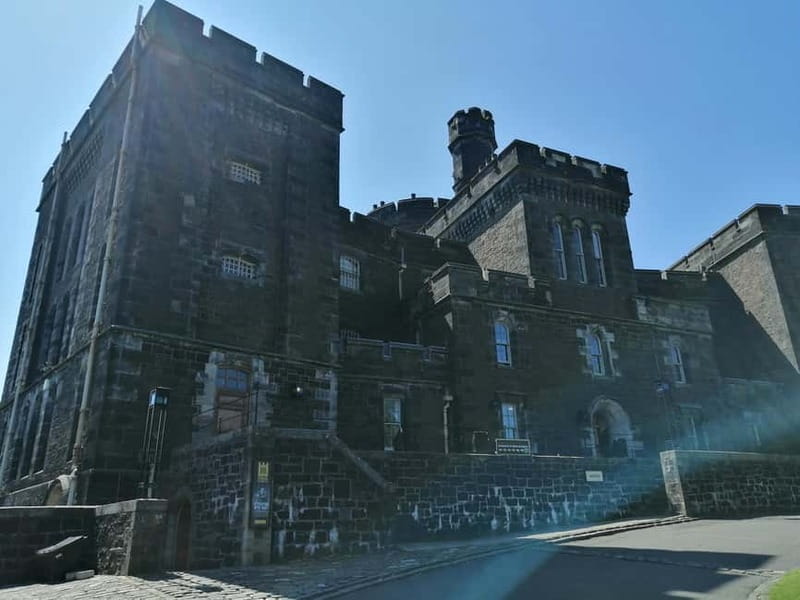
- Starting at Stirling Old Town Jail
- Stirling Highland Hotel and the climb through the Old Town
- Broad Street and the old marketplace
- The Tolbooth and Stirling’s civic life
- Mar’s Wark and the marks left by powerful families
- The Church of the Holy Rude
- Cowane’s Trust and the people behind the buildings
- Old Town Cemetery and three centuries of gravestones
- Stirling Castle and the stories of Scotland
- What the guides do particularly well
- Is $19 good value for 90 minutes?
- Who should book this Stirling walk?
- What to bring and how to prepare
- Should you book this tour?
- FAQ
- How long is the Stirling walking tour?
- What time does the tour start?
- Where do I meet the guide?
- Where does the tour finish?
- What language is the tour conducted in?
- Is the tour suitable for people with different fitness levels?
- Is the tour wheelchair accessible?
- What is included in the price?
Why Stirling is best understood on foot
Stirling is often treated as a stop between Edinburgh and the Highlands. That undersells it. The city’s position made it a key route through Scotland, and its streets connect royal power, military history, religion, punishment, trade, and daily life in a compact area.
A guided walk helps you join those pieces together. You are not simply looking at a jail, a church, a cemetery, and a castle as separate attractions. You are learning how each place fits into the city’s story and how Stirling became known as the Gateway to the Highlands.
The tour is leisurely rather than athletic. You cover a lot in 90 minutes, but the guide can slow the pace on the hills, and you may sit while listening when needed. That makes this a useful first activity in Stirling, especially if you want to understand the town before spending more time inside the castle.
The tour is in English. Guides associated with this experience include Jane, Jayne, Diane, Georgia, Beth, and Donnie. Their individual style may vary, but the strongest pattern is clear: this is built around speaking, explaining, and answering questions rather than handing you a list of dates.
Starting at Stirling Old Town Jail
Meet outside the Stirling Old Town Jail. Look for the guide wearing a bright orange jacket, and arrive 5 to 10 minutes before the scheduled start at either 11 a.m. or 2 p.m., depending on the date you choose.
The jail is an effective starting point because it introduces one of the tour’s main themes: Stirling’s history was not only made by monarchs and military leaders. It was also shaped by people who were arrested, punished, traded, worshipped, worked, and lived in the old town.
From here, you begin to see Stirling as a working community rather than a backdrop for famous battles. The guide’s job is to bring out those smaller details, including the meaning of old building symbols and the stories attached to particular streets.
More Stirling Castle and Kelpies trips:
- From Edinburgh: Loch Lomond, Stirling Castle & Kelpies Tour
★ 4.6 · 2,360 reviews - Loch Lomond, Kelpies & Stirling Castle Tour Including Admission
★ 4.5 · 1,305 reviews - Edinburgh: Loch Lomond, Stirling Castle and the Kelpies Day Tour
★ 4.5 · 1,198 reviews
Stirling Highland Hotel and the climb through the Old Town
The next sightseeing point is the Stirling Highland Hotel. The route then continues through the old town, where the uphill setting becomes part of the experience.
Stirling’s slopes give you changing views and help explain why the historic center feels layered. You climb toward the castle, and the streets gradually reveal more of the city’s past. The hills are not extreme, but they are real. If you have limited mobility, take the guide’s promise of a slower pace seriously and wear shoes with a good grip.
This is also where a guide adds practical value. On your own, you may notice that a street rises sharply or that buildings look old, but you may not understand why the route developed that way. A local explanation turns the walk from simple sightseeing into a lesson in how Stirling grew.
Broad Street and the old marketplace
Broad Street brings you into the public heart of Stirling’s Old Town. The tour discusses happenings in the marketplace, along with crime and punishment.
This section should appeal to you if you prefer social history to a parade of royal names. Markets were places for business, gossip, public announcements, and sometimes harsh displays of authority. The guide connects those everyday activities with the wider history of Stirling.
The emphasis on crime and punishment may not suit everyone, particularly younger children who dislike grim details. Still, it gives the tour some edge. You get a more complete picture of the old town, including the difficult parts that are often skipped in polished sightseeing narratives.
The Tolbooth and Stirling’s civic life
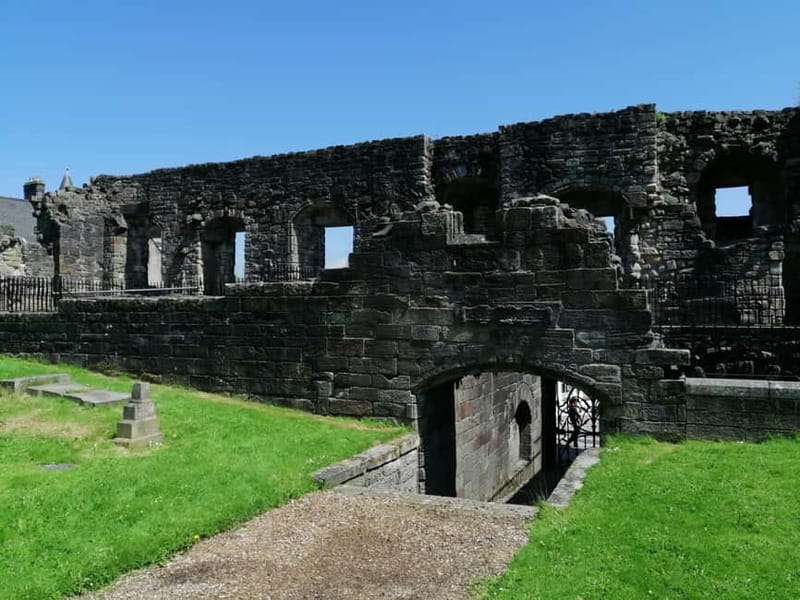
At the Tolbooth, the story turns toward civic power and local administration. This stop helps you consider how Stirling was governed and how authority was made visible in the town.
The exact amount of time spent at each stop depends on the guide and the group. That is useful to remember. A 90-minute walking tour cannot explain every building in detail, so the experience works best as a strong introduction rather than a substitute for visiting the city’s museums or the castle interiors.
The guides are encouraged to answer questions, and the feedback attached to this experience repeatedly highlights their ease with conversation. Beth, in particular, was praised for making eye contact with each person and answering questions patiently. That kind of attention matters on a small city walk, where the best moments often come from a question you think of while standing in front of a building.
More walking tours in Edinburgh:
- Edinburgh: Harry Potter Magical Guided Walking Tour
★ 4.8 · 11,944 reviews - Edinburgh Castle: Guided Walking Tour with Entry Ticket
★ 4.7 · 11,699 reviews - Underground Vaults Walking Tour in Edinburgh Old Town
★ 4.5 · 8,506 reviews - Edinburgh Castle: Guided Walking Tour with Entry Ticket
★ 5.0 · 5,540 reviews
Mar’s Wark and the marks left by powerful families

Mar’s Wark is one of the route’s most memorable architectural stops. Its remains point to Stirling’s connection with powerful families and the city’s former importance.
This is a good place to use the guide’s advice about reading buildings. Instead of seeing a weathered façade as a picturesque ruin, you learn to look for clues about status, purpose, and age. The tour does not ask you to study architecture formally. It gives you a few useful habits that you can carry through the rest of Scotland.
I like this part of the walk because it rewards attention. Stirling’s strongest details are not always the largest ones. A fragment of masonry or a carved symbol can tell you something about the people who once occupied the street.
The Church of the Holy Rude
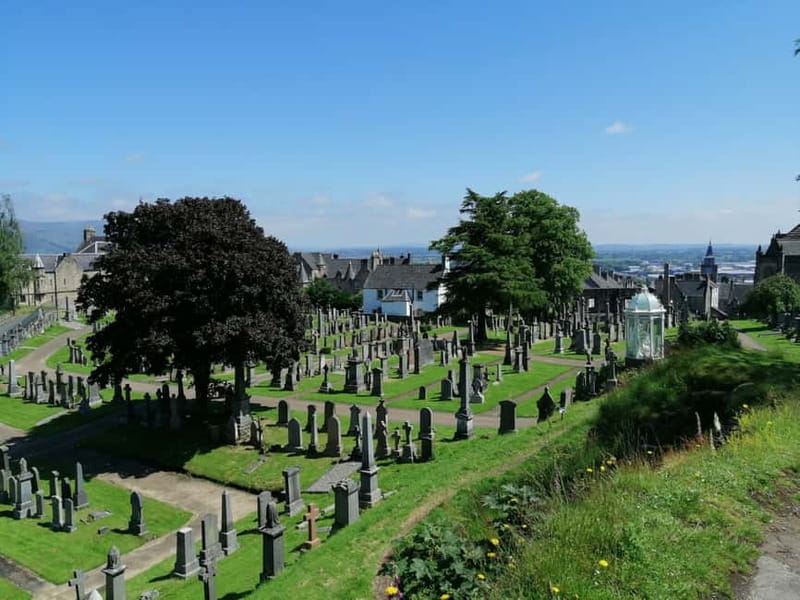
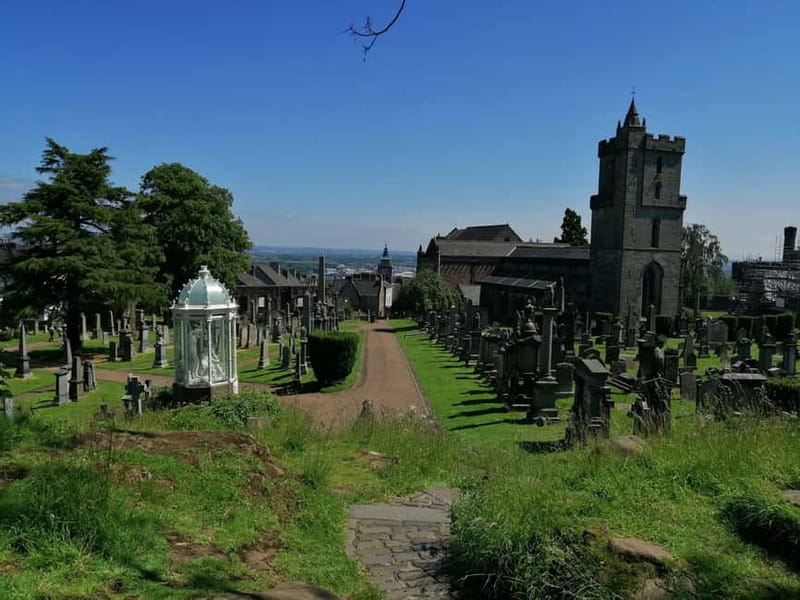
The Church of the Holy Rude is one of the major landmarks on the route. The guide places it within Stirling’s religious and royal story, adding another layer to the city’s past.
You will hear about kings and queens, but the stop is not limited to royal drama. Churches were central to community life, and their presence helps explain how the old town functioned. The guide also discusses the people connected with the surrounding area, giving you a sense of how religion and civic life overlapped.
This is a stop where time can pass quickly. If you want a detailed interior visit, set aside time after the walking tour. The guided walk gives you context and an outside view, while a separate visit lets you linger over the church itself.
Cowane’s Trust and the people behind the buildings
Cowane’s Trust adds another human detail to the route. It helps move the focus away from battles and rulers and toward local responsibility, money, and community institutions.
That balance is one of the tour’s strengths. Stirling’s famous figures are part of the story, but they are not the entire story. You also hear about the people and organizations that shaped the town’s streets and public life.
The guides named in the feedback, including Georgia and Jane, were repeatedly praised for making the past easy to follow and for linking the history to modern life. That is particularly helpful here, where a building’s name alone may not tell you why it matters.
Old Town Cemetery and three centuries of gravestones
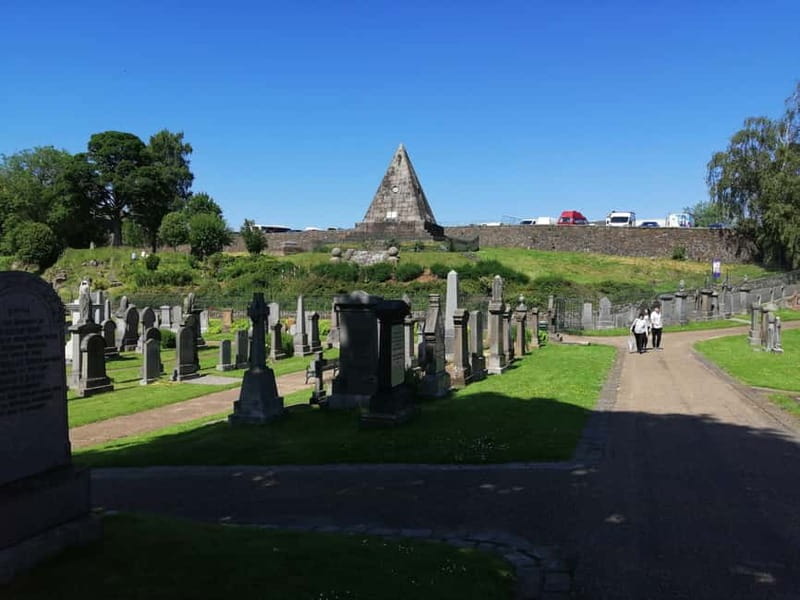
The Old Town Cemetery is perhaps the most distinctive stop. Rather than simply walking past the stones, you learn how to interpret them and what their symbols can reveal.
Gravestones offer a direct link to ordinary lives. Names, dates, carvings, and wording can suggest a person’s occupation, beliefs, family position, or place in the community. You do not need prior knowledge to enjoy this section. The guide supplies the clues and encourages you to look more closely.
The cemetery also offers views from Stirling Craig. Bring weather-ready clothing, since the open setting can feel exposed. This is one of the places where the walk’s relaxed pace helps. You can pause, listen, and take in the view without being hurried from one photo stop to the next.
If you have only a short time in Stirling, the cemetery is a strong reason to choose this tour over a basic castle-only visit. The castle is famous, but the gravestones show you a quieter side of the city.
Stirling Castle and the stories of Scotland
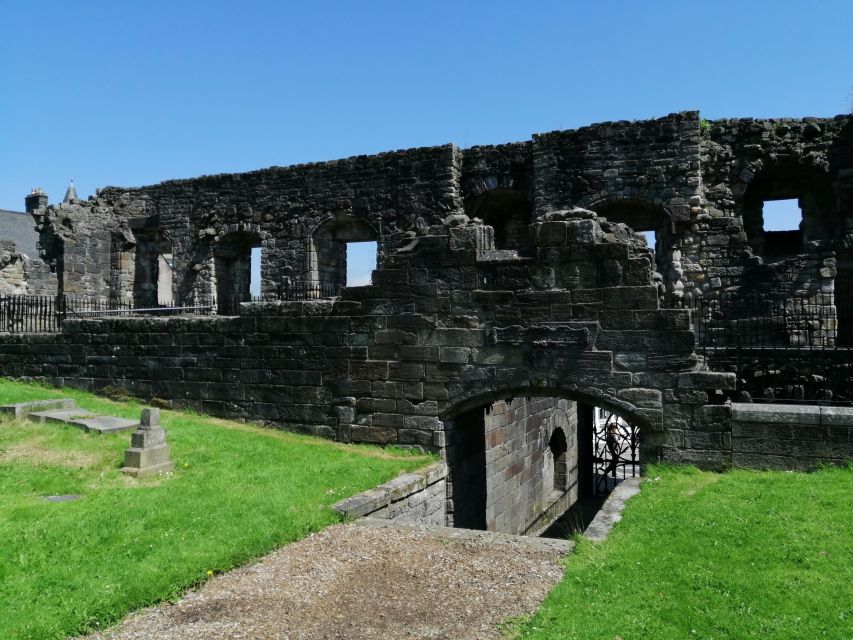
The route finishes at Stirling Castle, bringing together the themes of power, conflict, ceremony, and geography.
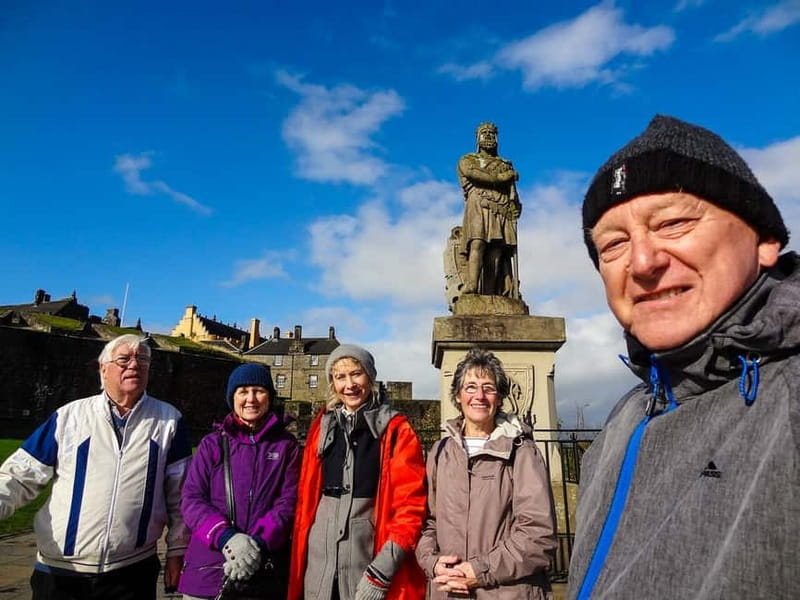
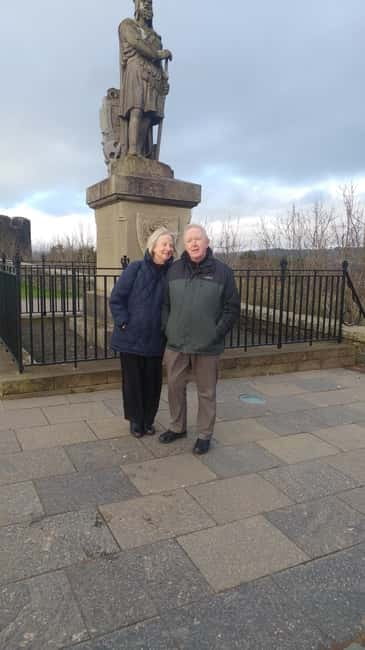
From the castle area, the guide discusses battles, Scottish heroes, kings, queens, and events that influenced Scotland’s course. William Wallace and Robert the Bruce are part of the wider Stirling story, and the tour also refers to the Battle of Stirling Bridge. If films have shaped your interest in Scottish history, this is a useful chance to separate popular images from the city’s own account.
The castle is the natural final point because it gives the walk a strong sense of arrival. You can continue into the castle afterward if you have a ticket and enough time, or use the tour’s background to make more sense of what you see inside.
There is one practical detail to clarify before booking. The route information describes the walk as finishing at Stirling Castle, but the meeting information also says the activity ends back at the meeting point outside the Old Town Jail. Because those details do not match, confirm the final drop-off point when you book, especially if you have a train, bus, or timed castle entry.
What the guides do particularly well
The most praised quality is the guide’s ability to make history feel personal. Jane and Jayne are described as friendly, funny, enthusiastic, and easy to listen to. Georgia is noted for keeping the group engaged and bringing the subject to life. Beth is praised for her welcoming manner and patient answers, while Diane is associated with a calm pace that does not make people feel rushed.
These details matter more than a long list of credentials. On a walking tour, a guide who notices the group, makes eye contact, and welcomes questions can change the whole experience.
You should also expect different personalities from one departure to another. One guide may lean toward humor, another toward detailed explanation, and another toward conversation. The common aim is to make Stirling understandable, not to deliver a memorized speech at top speed.
A local drink tasting is included. It is a small addition, but it gives the walk a local flavor and creates a natural break from the historical material.
Is $19 good value for 90 minutes?
At $19 per person, the tour is reasonably priced for a guided introduction to Stirling. You are paying for a local perspective, a planned route through the main old-town sights, and help making sense of details that are easy to miss.
The value is strongest if this is your first visit or if you have only one day in town. The tour helps you get your bearings, then leaves you positioned near Stirling Castle for further sightseeing. It can save you from wandering past important buildings without understanding their purpose.
The price is less compelling if you already know Stirling well or want long interior visits at each attraction. This is a walking overview, not an all-inclusive ticket. Hotel pickup and drop-off are not included, and you will need to arrange entry fees separately if you visit the jail, church, or castle after the tour.
Free cancellation up to 24 hours before the start and reserve-now, pay-later booking make it easier to fit into a changeable Scotland itinerary.
Who should book this Stirling walk?
I would choose this tour for first-time visitors, families who enjoy stories, solo visitors who want company, and anyone interested in the people behind Scotland’s grand events.
It also suits you if you like a gentle pace and want to ask questions. The route is family-friendly, and the guide can take the hills slowly. It is listed as wheelchair accessible, but you should still consider the steep sections and confirm that the route suits your specific needs.
You may want something else if you dislike outdoor sightseeing in uncertain weather, have no interest in historical storytelling, or want to spend the full 90 minutes inside Stirling Castle. The tour is also not ideal for anyone wearing unsuitable shoes. Even a leisurely walk becomes uncomfortable on old-town slopes in thin soles.
What to bring and how to prepare
Wear comfortable shoes and weather-appropriate clothing. Stirling’s streets include hills, and the cemetery and castle areas may feel different from sheltered town streets.
Bring your booking confirmation, with an electronic copy accepted. Arrive early enough to locate the orange-jacketed guide outside the Old Town Jail without a last-minute scramble.
If you plan to visit Stirling Castle after the walk, check the timing carefully. The tour has 11 a.m. and 2 p.m. departures, but the exact availability varies, and the walking portion alone lasts 1.5 hours.
Should you book this tour?
Book it if you want Stirling to make sense before you explore it in detail. For $19, you get a focused route, a local guide, a drink tasting, castle views, and stories that range from royal battles to old jail cells and cemetery symbols.
I would especially recommend it at the start of your visit. You will leave with a clearer map of the Old Town and a better idea of which places deserve a longer look. Just allow for the hills, dress for the weather, and confirm where the tour finishes before setting up your onward plans.
FAQ
How long is the Stirling walking tour?
The tour lasts 1.5 hours.
What time does the tour start?
Daily departures are listed at 11 a.m. and 2 p.m. Check availability for the exact starting time on your chosen date.
Where do I meet the guide?
Meet outside Stirling Old Town Jail. The guide wears a bright orange jacket.
Where does the tour finish?
The route information lists Stirling Castle as the finish. The meeting details also say the activity ends back at the meeting point, so confirm the final location when booking.
What language is the tour conducted in?
The live tour guide speaks English.
Is the tour suitable for people with different fitness levels?
Yes. The tour is described as suitable for all fitness levels, and the guide can take the steep hills slowly. Comfortable shoes are recommended.
Is the tour wheelchair accessible?
Yes, the activity is listed as wheelchair accessible. Because the route includes some steep hills, confirm that the specific route meets your needs.
What is included in the price?
The price includes a local guide and a local drink tasting. Hotel pickup and drop-off are not included.
Just added around Edinburgh
- the World Famous Kelpies and Stirling Castle small group tours★ 4.5 · 14 reviews
- Outlander Walking Tour of Edinburgh’s Old Town★ 4.5 · 14 reviews
- Edinburgh: Stirling Castle & Loch Lomond Private Luxury Day Tour★ 4.5 · 14 reviews
- Edinburgh: Hill & Nature Hike With a Local★ 5.0 · 14 reviews
- Edinburgh: Rosslyn Chapel and Hadrian’s Wall Tour in Spanish★ 4.5 · 14 reviews
- Private – Culloden, Clava Cairns Day Tour from Edinburgh★ 5.0 · 14 reviews
- Edinburgh: Stirling, Whisky & St Andrews Tour in Italian★ 3.9 · 14 reviews
- Private Edinburgh Castle Tour★ 4.5 · 14 reviews
Stirling Castle & the Kelpies, compared.


Loch Lomond, Kelpies & Stirling Castle Tour Including Admission
Read our review →
Loch Lomond, Stirling Castle and the Kelpies Day Tour
Read our review →


Rosslyn Chapel, Dunfermline Abbey and Stirling Castle Day Tour
Read our review →

Loch Lomond, Stirling Castle, & Kelpies Tour from Edinburgh
Read our review →Browse the lists this tour appears in