
Reviewed · HISTORICAL TOURS
Medical and Surgical History of Edinburgh – Private Walking Tour
Edinburgh’s medical story unfolds in the streets, closes, courtyards, and old university buildings of the city. This private walking tour connects those places into one thoughtful journey, from the Royal Mile’s early medical institutions to the grand former Royal Infirmary on Lauriston Place. You’ll hear about doctors, surgeons, students, hospitals, and the long fight to admit women to medical training.
I like the private format, since your group can set the pace and ask questions without being lost in a large crowd. I also like the guide’s personal medical background, which adds a useful link between old practices and modern healthcare. The main drawback is the distance: about 2.5 miles over several hours, so it is not a good choice if walking is painful or difficult.
In This Review
- Key points at a glance
- Why Edinburgh’s medical past works so well as a walking tour
- Starting on the Royal Mile at Hunter Square
- Cowgate, Robertson’s Close, and the first teaching hospital
- Surgeons’ Hall and the fight for women’s medical education
- The University of Edinburgh and the student experience
- Bristo Place and Charles Darwin’s student lodgings
- Lauriston Place and the former Royal Infirmary
- What makes the private format worth the price
- Pace, fitness, and the practical side of the walk
- The guide’s style and the role of conversation
- Who should book this Edinburgh medical tour?
- Should you book Medical and Surgical History of Edinburgh?
- FAQ
- How long does the Medical and Surgical History of Edinburgh tour last?
- How far do you walk?
- Where does the tour begin?
- Where does the tour end?
- Is this a private tour?
- Is the tour offered in English?
- Are admission tickets included?
- Is food or drink included?
- Is the tour suitable for people with limited mobility?
- What happens if the weather is poor?
Key points at a glance
- Medical history in real city streets: Follow Edinburgh’s changing medical world through the Royal Mile, Cowgate, Bristo Place, and Lauriston Place.
- A private tour with Moray: The guide is also referred to as Dr. Grigor, and the experience is designed for your group alone.
- Former hospitals, not just monuments: See the sites of the first teaching hospital and the first Royal Infirmary of Edinburgh.
- Women’s struggle for medical training: At Surgeons’ Hall, the tour explains the years-long battle for women to enter Edinburgh’s Medical School.
- A thoughtful 2.5-mile route: Plan for 3 to 4 hours, with a cafe stop in the middle and time for conversation.
- Strong value for specialist interests: At $130.44 per person, the price makes more sense for a private group with a real interest in medicine, social history, or Edinburgh’s university story.
Why Edinburgh’s medical past works so well as a walking tour
Many city tours treat old buildings as scenery. This one gives them a job to do. A narrow close becomes the site of an early medical college. A former hospital complex explains how teaching and patient care developed together. A university building reveals the hard routine of medical students.
That approach gives you a clearer sense of change over time. You are not simply hearing a list of famous doctors. You are following the growth of medicine in Edinburgh, from modest beginnings to a city known for medical education and surgery.
The route also brings in social history. You’ll hear about student life, professional status, women’s access to education, and the practical demands placed on doctors and surgeons. That wider view is important because medicine never developed in isolation from the city around it.
The tour has received a five-star rating from all 19 recorded ratings, and that matches the experience’s clear focus. It is not trying to cover every part of Edinburgh. It spends its time on one subject and gives that subject room to breathe.
More historic sites in Edinburgh:
- Edinburgh: Edinburgh Castle Guided History Tour with Tickets
★ 4.8 · 7,747 reviews - Edinburgh: Whisky Tasting with History and Storytelling
★ 4.9 · 2,451 reviews - Edinburgh: Old Town History and Tales Walking Tour
★ 4.8 · 2,361 reviews
Starting on the Royal Mile at Hunter Square
The meeting point is Hunter Square, near the Royal Mile. From here, the tour begins along Edinburgh’s oldest main street, using the historic center as an introduction to the origins of medicine and surgery in the city.
The first section lasts about 45 minutes. You’ll learn where Edinburgh’s medical institutions began and locate the alleyway connected with the city’s College of Physicians. The setting matters. The Royal Mile can feel like a grand parade of castles, churches, and souvenir shops, but this walk asks you to notice the smaller lanes and less obvious traces of professional life.
I like this opening because it gives you a framework for the rest of the afternoon. You begin with the institutions and people who shaped medical practice, then move toward the places where students were taught and patients were treated.
The first stop is free, as are the other sites on the route. That does not mean every doorway is entered, however. The value comes from the guide’s commentary and from understanding what occupied these spaces in earlier centuries.
Cowgate, Robertson’s Close, and the first teaching hospital
The walk continues toward the Cowgate, a lower part of Edinburgh with a very different feel from the Royal Mile. Just off the Cowgate, you’ll find Robertson’s Close, associated with The Little House, described as Edinburgh’s first teaching hospital.
This section lasts about an hour, making it the longest stop on the tour. You’ll also explore the complex connected with the first Royal Infirmary of Edinburgh. The focus shifts from professional origins to the practical world of teaching medicine and caring for patients.
This is where the tour’s street-level method becomes especially useful. Instead of hearing about a hospital in the abstract, you are standing near the places where Edinburgh’s early medical education took shape. The contrast between the tight old closes and the later hospital complex helps show how medical institutions expanded.
The Cowgate section may appeal most to people interested in how cities worked. It brings together architecture, public health, education, and the daily business of treatment. You’ll also want comfortable shoes here. The full route covers roughly 2.5 miles, and old Edinburgh streets may include uneven surfaces, slopes, and steps, although the supplied information does not specify every surface along the way.
Surgeons’ Hall and the fight for women’s medical education
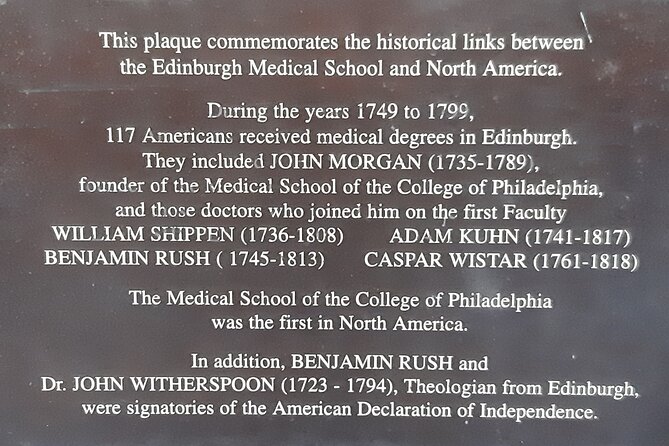
Surgeons’ Hall Museums is the next major stop. The tour describes this as the historic home of the surgical profession, and you’ll spend about 45 minutes here hearing about the long campaign for women to be admitted to the Medical School.
This subject gives the walk an important human dimension. The story is not only about famous male surgeons or institutional growth. It also concerns who was allowed to study, who was blocked from professional training, and how medical education changed over time.
A refreshment break takes place at a cafe around this part of the tour. Coffee or tea is not included, so bring a little extra money. The pause is useful after the longest walking section, and it gives you time to discuss the material with the guide rather than rushing from one stop to the next.
One practical point deserves emphasis: this tour does not include a medical museum visit as part of the experience. Surgeons’ Hall Museums is included as a historic location and discussion point, but the supplied details do not promise museum admission or a museum tour. If you want to explore medical collections separately, plan that as another activity.
More walking tours in Edinburgh:
- Edinburgh: Harry Potter Magical Guided Walking Tour
★ 4.8 · 11,944 reviews - Edinburgh Castle: Guided Walking Tour with Entry Ticket
★ 4.7 · 11,699 reviews - Underground Vaults Walking Tour in Edinburgh Old Town
★ 4.5 · 8,506 reviews - Edinburgh Castle: Guided Walking Tour with Entry Ticket
★ 5.0 · 5,540 reviews
The University of Edinburgh and the student experience
After the cafe break, the route reaches the University of Edinburgh’s former Medical School. This stop lasts about 20 minutes and focuses on the city’s growing importance as a medical center.
You’ll also hear about the daily life of medical students, including the drudgery and rewards of their training. That detail helps balance the grander stories. Medical education can sound glamorous when reduced to great names and famous discoveries, but student life involved long work and demanding routines.
I like this part because it connects institutions with people. A university building is more interesting when you can picture the students who studied there, the pressures they faced, and the professional rewards they hoped to gain.
The stop is short, but that is probably sensible. The tour has already covered several sites, and the following section continues the university story. The guide’s role is especially important here, since the building alone will not explain the experience of studying medicine in earlier Edinburgh.
Bristo Place and Charles Darwin’s student lodgings
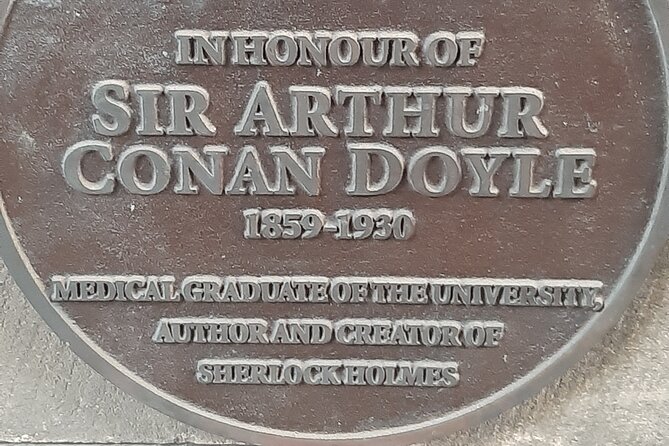
The route passes through Bristo Place, where you’ll hear about the site of Charles Darwin’s former medical-student lodgings. The walk then continues toward the imposing 1880s Medical School and graduation hall.
This section takes about 25 minutes. Darwin’s connection gives the route a recognizable name, but the larger point is Edinburgh’s role as a place where ambitious students came to study medicine and science.
The old lodgings also offer a more personal glimpse of student life than a grand institutional building can provide. You are moving from the formal world of schools and hospitals to the places where students lived while training.
The 1880s Medical School and graduation hall provide a strong architectural contrast to the early closes and hospital sites. By this stage, you can see how the city’s medical ambitions had grown. The route has moved from small beginnings to larger buildings designed to represent an established profession.
Lauriston Place and the former Royal Infirmary
The final stop is at Lauriston Place, in the grand front courtyard of the former Royal Infirmary of Edinburgh. Today, the end point is Edinburgh University’s Futures Institute, at 1 Lauriston Place.
The final section lasts about 15 minutes and brings the tour to its natural finish. Here, the guide tells stories of notable doctors and surgeons associated with the institution. The setting gives those stories a fitting backdrop, with the former infirmary’s entrance plaza marking the scale and status of Edinburgh’s medical tradition.
You will not finish back at Hunter Square. The tour ends at Lauriston Place, so keep that in mind when planning the rest of your day. The end point is in central Edinburgh and near public transport, according to the supplied details.
I like this ending because it feels earned. You begin with early medical origins and finish at a major former hospital. The route becomes a visual timeline, even though the tour remains grounded in specific people and places.
What makes the private format worth the price
The cost is $130.44 per person. That is a serious price for a walking tour, especially since admission tickets are not charged and refreshments are extra.
Still, the comparison is not quite the same as comparing it with a large group city walk. This is a private activity, so only your group participates. You are paying for a specialist subject, a dedicated guide, and the freedom to ask questions throughout the route.
The value is strongest if you have a professional or personal interest in medicine, surgery, public health, medical education, or Edinburgh’s university history. It may also suit a family group with older children or adults who prefer a focused subject instead of a general overview of the city.
For a casual first-time visit to Edinburgh, the price may be harder to justify. You could spend the same money on several general attractions or other tours. The specialist focus is the reason to book, not simply the chance to walk through the Old Town.
Group discounts are available, which may improve the cost for a larger private party. Confirmation is sent within 48 hours of booking, subject to availability. The activity is offered in English and uses a mobile ticket.
Pace, fitness, and the practical side of the walk
Plan on 3 to 4 hours, although one recorded experience lasted a little over four hours. The exact timing may depend on questions, conversation, and the length of the cafe break.
The route is about 2.5 miles. You should have a moderate level of physical fitness, and the tour is not recommended if you have chronic or painful musculoskeletal conditions. This is not a quick stroll between nearby landmarks. The route crosses several parts of central Edinburgh and includes a substantial amount of standing and walking.
Wear comfortable shoes and avoid scheduling a tight appointment immediately afterward. The guide has been described as keeping a good pace, but the tour is designed for conversation, not speed.
Weather also matters. The experience requires good weather. If poor conditions cause cancellation, you’ll be offered another date or a full refund. You can cancel for a full refund up to 24 hours before the start time, but cancellations or changes made inside that window are not accepted.
Service animals are allowed. The route is near public transportation, though no specific bus or tram instructions are provided.
The guide’s style and the role of conversation
The guide is identified in the supplied material as Moray, and some feedback refers to Dr. Grigor. The strongest praise focuses on warmth, enthusiasm, pacing, and the ability to explain complex medical subjects in an entertaining way.
That combination matters. Medical history can become a string of dates, names, and technical terms. A guide with medical experience can add a personal perspective, while a good storyteller keeps the walk moving. The tour also seems to allow room for conversation about healthcare, including comparisons with modern medical careers and systems.
You should expect plenty of information. One section of feedback describes quite a lot to take in, which is both a strength and a warning. If you enjoy focused learning, that density will be welcome. If you prefer a light stroll with only a few facts, this may feel like work.
The best approach is to treat the tour as a small seminar on foot. Ask questions, take short notes if you want to remember names, and allow yourself time afterward to let the ideas settle.
Who should book this Edinburgh medical tour?
I would recommend it to:
- Medical professionals and students
- People interested in the social history of medicine
- Visitors who want a subject-specific walk rather than a general Old Town tour
- Families or friends who want a private experience with time for questions
- Anyone curious about Edinburgh’s universities, hospitals, and famous medical figures
I would think twice if you have limited walking ability, dislike long historical explanations, or want interior museum access included in the price. The tour is also less useful if you only have a short time in Edinburgh and need a broad introduction to the city.
The 100 percent recommendation rate from 19 recorded ratings is encouraging, but the subject is clearly specialized. High satisfaction here reflects a strong match between the tour and its intended audience.
Should you book Medical and Surgical History of Edinburgh?
Book it if the history of medicine genuinely interests you, especially if you want to see how Edinburgh’s medical identity developed through its streets, schools, and hospitals. The private format, guide’s medical background, clear route, and well-timed cafe break make it more personal than a standard sightseeing walk.
Skip it if you are looking for castles, panoramic views, or a quick introduction to Edinburgh. You’ll spend several hours walking and listening, and the price is high for anyone who does not care about the subject.
For the right person, this is a thoughtful and unusual way to understand Edinburgh. You leave with more than names of doctors. You see how education, hospitals, professional status, student life, and access to training shaped the city’s medical world.
FAQ
How long does the Medical and Surgical History of Edinburgh tour last?
The tour lasts approximately 3 to 4 hours. One recorded experience ran for more than four hours, so avoid making a tight booking immediately afterward.
How far do you walk?
The route covers approximately 2.5 miles through central Edinburgh.
Where does the tour begin?
The tour begins at Hunter Square, Edinburgh EH1, near the Royal Mile.
Where does the tour end?
It ends in the front courtyard of Edinburgh University’s Futures Institute, formerly the Royal Infirmary of Edinburgh, at 1 Lauriston Place, Edinburgh EH3 9EF.
Is this a private tour?
Yes. Only your group participates in the activity.
Is the tour offered in English?
Yes, the tour is offered in English.
Are admission tickets included?
All guiding and commentary are included, and the listed stops have no admission ticket charge. The supplied details do not promise admission into a medical museum collection.
Is food or drink included?
No. The tour includes a refreshment cafe stop, but coffee, tea, food, and other drinks are not included.
Is the tour suitable for people with limited mobility?
You should have a moderate level of physical fitness. Because the route covers about 2.5 miles, it is not recommended for people with chronic or painful musculoskeletal conditions.
What happens if the weather is poor?
The experience requires good weather. If it is canceled because of poor conditions, you’ll be offered a different date or a full refund.
Just added around Edinburgh
- Outlander Walking Tour of Edinburgh’s Old Town★ 4.5 · 14 reviews
- Edinburgh: Stirling Castle & Loch Lomond Private Luxury Day Tour★ 4.5 · 14 reviews
- the World Famous Kelpies and Stirling Castle small group tours★ 4.5 · 14 reviews
- Edinburgh: Hill & Nature Hike With a Local★ 5.0 · 14 reviews
- Edinburgh: Rosslyn Chapel and Hadrian’s Wall Tour in Spanish★ 4.5 · 14 reviews
- Private – Culloden, Clava Cairns Day Tour from Edinburgh★ 5.0 · 14 reviews
- Edinburgh: Stirling, Whisky & St Andrews Tour in Italian★ 3.9 · 14 reviews
- Private Edinburgh Castle Tour★ 4.5 · 14 reviews
Historical Tours, compared.
Edinburgh Castle Guided History Tour with Tickets
Read our review →
Old Town Walking Tour History and Tales in Edinburgh
Read our review →
Multi-Sensory Small-Group Historic Vaults Tour in Edinburgh
Read our review →
Browse the lists this tour appears in